Buyer guide for Vietnam PCB sourcing

PCB Manufacturerin Vietnamvs China PCBManufacturerHow to Choose the RightFabrication Partner

Vietnam has become one of the mostdiscussed alternatives for electronicsmanufacturing, especially for buyersplanning a China+1 supply chain.But searching for a PCB manufacturerin Vietnam is not the same as qualifyinga bare-board fabrication partner.This guide compares Vietnam PCBmanufacturing with a China PCBmanufacturer such as XFPCB so buyerscan match cost, lead time, complexity,origin strategy and engineering capabilityto the real risk of the project.

PCB manufacturer in Vietnam Vietnam PCB manufacturing China+1 sourcing HDI PCB China PCB manufacturer

Why Buyers Search for a PCB Manufacturer in Vietnam

The keyword "PCB manufacturer in Vietnam" usually carries a broader sourcing question. Many buyers are not simply asking where a circuit board can be fabricated. They are asking whether Vietnam can reduce reliance on a single country, support final electronics assembly, improve tariff or country-of-origin planning, shorten logistics to a Vietnam-based EMS partner, or provide a politically easier supply chain story for customers in the United States, Europe, Japan or Korea.

Vietnam's electronics sector has grown quickly. Public reporting from Vietnam Customs and VietnamPlus describes electronics as a major export pillar, with computers, electronic products and components reaching record levels in 2025. The OECD's 2025 economic survey also discusses Vietnam's semiconductor and electronics ambitions, while noting that deeper capability depends on skilled labor, infrastructure, electricity and continued ecosystem development. In plain procurement language, Vietnam is no longer a small assembly market. It is a serious electronics manufacturing location.

Still, buyers should separate electronics assembly from bare PCB fabrication. A factory that can assemble products in Vietnam may still buy printed circuit boards from China, Taiwan, Korea, Japan or another source. A Vietnam EMS partner may be excellent for SMT, box build, test and export packaging, while the best bare-board supplier for an HDI or high-layer-count board may still be a China PCB manufacturer. The practical sourcing decision is not "Vietnam good, China bad" or "China good, Vietnam bad." It is a question of which production step belongs where.

XFPCB is a China-based PCB manufacturer. We do not present ourselves as a Vietnam PCB factory. Our role in this comparison is direct: if your project needs mature multilayer PCB fabrication, HDI review, controlled impedance, high-layer-count capability, DFM feedback and factory-direct pricing, XFPCB can be evaluated as a China manufacturing option. If your customer requires Vietnam manufacturing, local assembly in Vietnam, or a specific country-of-origin strategy, that requirement should be handled honestly at the procurement level.

Vietnam PCB Manufacturer vs China PCB Manufacturer: Practical Comparison

For a commodity double-sided board, the difference between suppliers may look simple. For a dense multilayer PCB, an RF board, an impedance-controlled design, a BGA-heavy board, or a high-layer-count backplane, the supplier comparison becomes more technical. The table below helps procurement teams compare a PCB manufacturer in Vietnam with a China PCB manufacturer such as XFPCB.

Decision Factor Vietnam PCB Manufacturer China PCB Manufacturer such as XFPCB
China+1 strategy Strong fit when the buyer wants a manufacturing footprint outside China, especially if final assembly, testing or box build already happens in Vietnam. Strong fit when the buyer wants mature PCB fabrication capability but can manage China exposure through inventory, dual sourcing or regional assembly planning.
Electronics ecosystem Vietnam has a fast-growing electronics and EMS ecosystem, supported by large foreign-invested manufacturers and industrial parks. China remains deeply concentrated in PCB materials, laminate supply, drilling, plating, surface finish, tooling, components, fixtures and engineering services.
Bare-board PCB capability Can be competitive for standard rigid PCBs and some mid-complexity work, but buyers should verify whether the factory is a true bare-board fabricator or mainly an EMS/assembly provider. XFPCB should be evaluated for multilayer, HDI, controlled impedance and high-layer-count PCB fabrication when the board requires deeper process engineering.
HDI and fine-line work Possible with the right supplier, but the buyer should verify laser drilling, microvia structure, sequential lamination, via-in-pad process control and inspection evidence. China's wider PCB base can make it easier to source HDI process options, special materials, high-density stackups and engineering feedback for complex commercial boards.
High-layer-count PCB Requires careful qualification. The number of suppliers with deep experience in 16-layer, 20-layer, 32-layer or 40-layer fabrication may be more limited. XFPCB's product structure already includes multilayer, 16-layer, 20-layer, 32-layer and 40-layer PCB content, making it a practical candidate for high-layer-count review.
Cost and landed price May be attractive for labor-intensive assembly or regional export planning, but PCB cost depends on laminate, copper, yield, tooling, shipment and imported inputs. Often attractive for factory-direct bare-board fabrication, especially when volume, mature material supply and repeatable process control are more important than country diversification.
Best-fit program Commercial electronics with Vietnam final assembly, simpler or mid-complexity PCBs, China+1 risk planning and buyers who already have Vietnam operations. Commercial multilayer PCBs, HDI designs, high-speed digital boards, high-layer-count boards and projects where mature fabrication depth is a primary requirement.

A good sourcing answer may even combine both regions: China for technically demanding bare PCB fabrication and Vietnam for SMT assembly or final product build. That depends on origin rules, customer requirements, cost modeling and logistics. Do not assume final assembly location automatically solves the origin or compliance question; review the actual rules for your product and market.

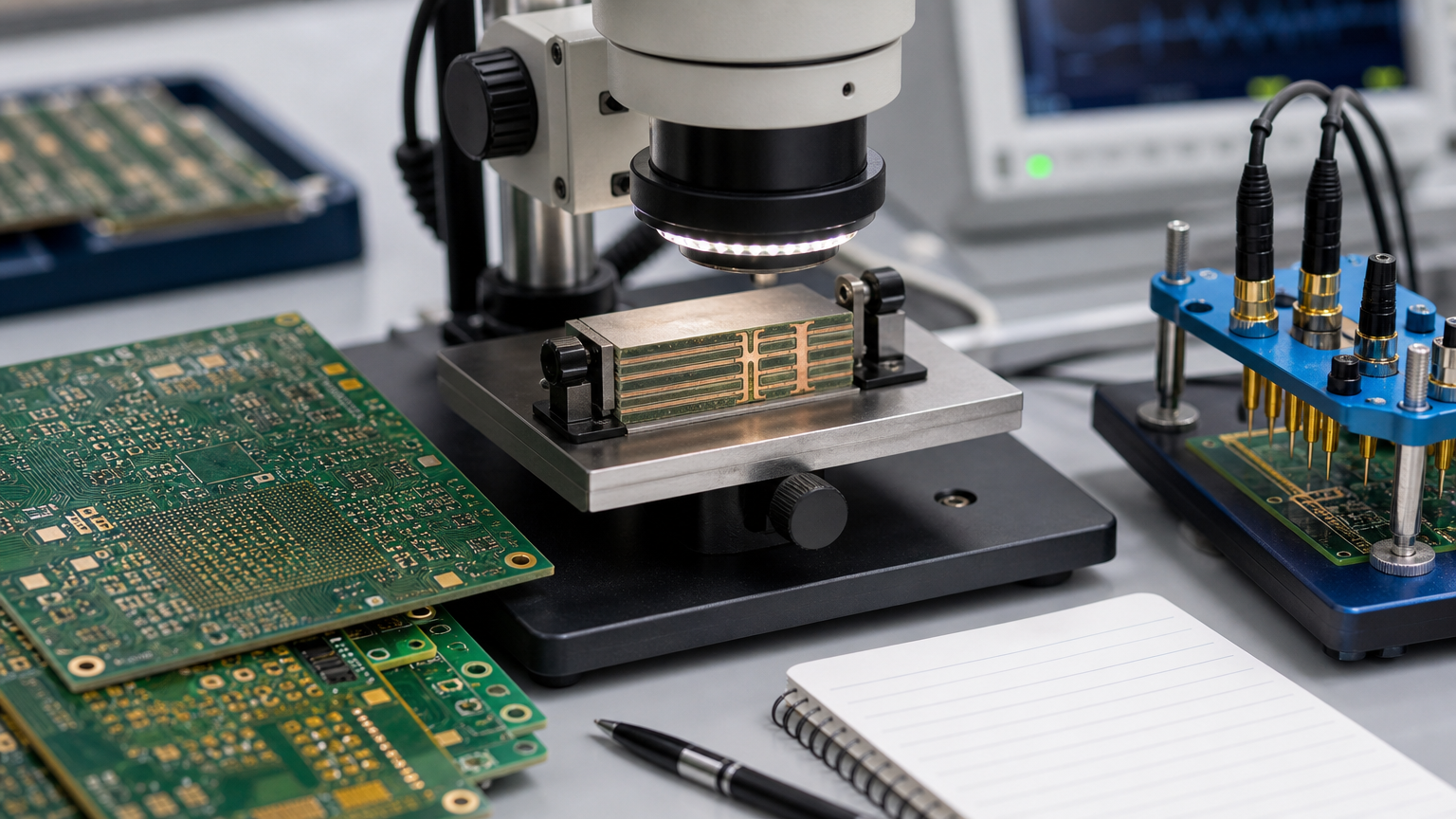
Multilayer PCB stackup inspection for Vietnam versus China PCB manufacturer sourcing comparison
For HDI, impedance-controlled and high-layer-count PCBs, the real supplier test is stackup engineering, lamination control, drilling, plating, inspection and documentation.

Where Vietnam PCB Manufacturing Can Be a Strong Fit

Vietnam can be a strong choice when the broader product strategy is already moving through Vietnam. If your EMS partner, box-build provider, testing provider or final export location is in Vietnam, using a Vietnam PCB manufacturer can simplify purchasing, reduce cross-border handoffs and improve coordination between board supply and assembly. This is especially relevant for consumer electronics, LED products, power modules, appliances, industrial devices and products where the printed circuit board is not the most technically difficult part of the build.

Vietnam may also fit buyers who need a China+1 supply-chain story. China+1 does not necessarily mean abandoning China. It usually means reducing the risk of having every production step in one country. For procurement teams, a Vietnam PCB supplier may be attractive because it supports a broader diversification plan: China remains a source for some components and process capability, while Vietnam becomes the assembly, test or alternative production node.

Another advantage is buyer perception. Some end customers now ask where products are made, how concentrated the supply chain is, and whether a company has a contingency plan. A Vietnam manufacturing option can help answer those questions, especially when the final product is assembled, tested and exported from Vietnam. For some companies, the commercial story matters almost as much as the unit cost.

The pain point is that "electronics manufacturing in Vietnam" does not automatically equal "advanced PCB fabrication in Vietnam." Vietnam has strong momentum in electronics exports and foreign-invested manufacturing, but a buyer still needs to qualify the exact factory. Is it a bare PCB fabricator or an EMS provider? Does it manufacture the board internally or outsource it? Does it control drilling, plating, solder mask, ENIG, impedance testing and final electrical test? Can it explain stackup trade-offs, or does it only quote what is on the drawing?

If your design is a 2-layer or 4-layer rigid PCB with conventional materials and normal tolerances, a Vietnam PCB manufacturer may be perfectly suitable. If the design requires laser microvias, controlled depth drilling, tight impedance, high-Tg or low-loss material, heavy copper, sequential lamination, large-format boards, or 16+ layers, the supplier qualification burden rises quickly.

Research context: public Vietnam electronics data points to strong export growth and FDI-driven manufacturing, while industry discussions still highlight local supply-chain depth and advanced capability as qualification questions. Useful references include VietnamPlus on electronics exports, ITPC on electronic products and components, and the OECD Economic Survey of Viet Nam 2025.

Where a China PCB Manufacturer Like XFPCB Can Be Stronger

China's PCB manufacturing advantage is not only low cost. It is the density of the ecosystem. Laminate suppliers, copper foil, drill tools, plating chemistry, surface finish vendors, test fixture support, CAM engineering, stencil and assembly partners, logistics providers and component markets are concentrated across mature electronics regions. That concentration can matter when a buyer needs fast engineering answers or special process options.

XFPCB fits buyers who are evaluating China PCB manufacturing for commercial electronics rather than restricted national-origin projects. Our website already organizes products by layer count and complexity, including 4-layer PCB, 8-layer PCB, 12-layer PCB, 16-layer PCB, 20-layer PCB, 40-layer PCB, multilayer PCB, and high-layer-count PCB. Those pages make it easier for a buyer to discuss the board by stackup, routing density, signal integrity and manufacturing risk.

For HDI boards, the key questions include via structure, laser drill size, pad stack, microvia reliability, copper fill, sequential lamination cycles and via-in-pad requirements. For high-speed boards, the questions include material choice, dielectric thickness, trace geometry, impedance tolerance, backdrilling, insertion loss, glass weave effect and coupon testing. For high-layer-count boards, the questions include registration, resin fill, copper balance, lamination pressure, drill aspect ratio, plating uniformity and cross-section evidence. These are areas where a mature China PCB manufacturer can be highly competitive.

The China option is not risk-free. Buyers worry about tariffs, geopolitical exposure, shipping time, IP protection, communication gaps and over-concentration. Those are legitimate concerns. But the answer is not always to move every PCB to another country. A more precise answer may be to use a qualified China PCB manufacturer for the technically demanding bare board, maintain buffer inventory, keep documentation strong, qualify a second source for simpler boards, and align final assembly with the customer's regional plan.

When buyers search for "PCB manufacturer in Vietnam", they often hope the answer will reduce risk automatically. In reality, risk moves. A Vietnam supplier may reduce country concentration but increase process-qualification risk for advanced boards. A China supplier may increase geopolitical exposure but reduce technical and material supply risk for complex PCB fabrication. Good procurement work makes those trade-offs visible instead of hiding them inside a unit price.

Choose a Vietnam PCB Manufacturer When

  • Your final assembly, testing or export operation is already in Vietnam.
  • Your customer wants a China+1 manufacturing story and the board technology is within the supplier's proven range.
  • The PCB is standard or mid-complexity, such as 1-layer, 2-layer, 4-layer or conventional 6-layer rigid boards.
  • You need closer coordination with a Vietnam EMS or box-build partner.
  • You have verified that the factory performs the relevant bare-board process internally or controls its subcontractor clearly.

Evaluate XFPCB as a China PCB Manufacturer When

  • Your project is commercial and does not require Vietnam-origin or country-specific manufacturing.
  • The board needs multilayer stackup review, controlled impedance, HDI, heavy copper or high-speed material discussion.
  • You need high-layer-count capability for 16-layer, 20-layer, 32-layer, 40-layer or advanced multilayer designs.
  • You want factory-direct pricing and mature PCB ecosystem support for prototype, pilot and production stages.
  • You can provide complete fabrication files, acceptance criteria, testing requirements and a clear technical contact.

How XFPCB's Product Range Supports This Comparison

A serious comparison should start from the board itself. A 2-layer LED control board, an 8-layer communication module and a 20-layer high-speed network board should not be sourced with the same evaluation checklist. XFPCB's product structure helps buyers place their design in the right technical category before asking whether Vietnam or China is the better source.

1-Layer and 2-Layer PCB

For cost-sensitive, simple circuits, Vietnam and China may both be practical. The decision often depends on assembly location, delivery route, quantity and supplier responsiveness.

View 2-Layer PCB

4-Layer and 6-Layer PCB

For IoT, smart devices and industrial controls, 4-layer and 6-layer boards require better stackup discipline, grounding strategy and stable fabrication quality.

View 4-Layer PCB

8-Layer and 12-Layer PCB

As routing density rises, buyers should compare HDI options, controlled impedance, via planning, material selection and DFM quality across suppliers.

View 8-Layer PCB

16-Layer PCB

16-layer designs often involve dense BGA fanout, power integrity, signal integrity and lamination control. This is where mature engineering review matters.

View 16-Layer PCB

20-Layer and Above

High-layer-count PCB sourcing should focus on registration, drill aspect ratio, plating reliability, impedance coupons, cross-sections and yield history.

View 20-Layer PCB

Multilayer PCB Guide

Use the multilayer PCB guide to clarify layer count, stackup, materials, copper weight and cost drivers before comparing Vietnam and China quotes.

Read Multilayer Guide
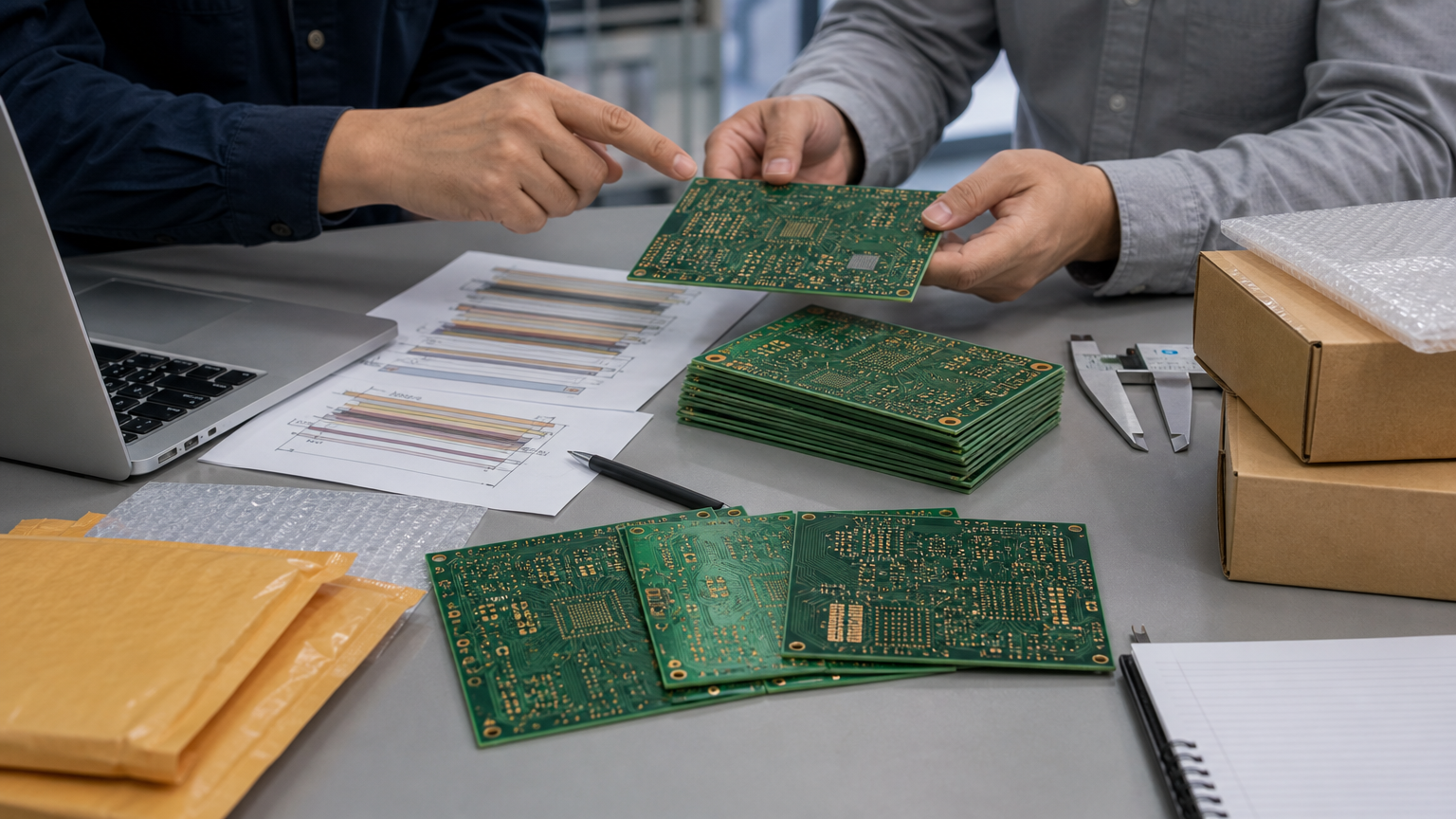
Procurement team reviewing PCB samples for China plus one supplier strategy
For China+1 planning, buyers should separate bare PCB fabrication, SMT assembly, final product testing, logistics and country-of-origin requirements.

Procurement Checklist for Vietnam vs China PCB Sourcing

Before you ask for prices from a Vietnam PCB manufacturer and a China PCB manufacturer, normalize the requirements. If the Vietnam quote excludes impedance testing or outsources ENIG while the China quote includes both, the price comparison is distorted. Use the checklist below to protect the project.

  1. Confirm the sourcing goal. Are you searching Vietnam because of China+1 strategy, final assembly location, tariff planning, customer preference, logistics, or actual bare-board capability?
  2. Verify factory role. Determine whether the supplier is a bare PCB fabricator, PCBA assembler, EMS provider, trading company, or hybrid partner that outsources fabrication.
  3. Lock the stackup. Compare the same material, board thickness, copper weight, dielectric structure, surface finish, solder mask, impedance and via structure.
  4. Demand DFM feedback. A qualified supplier should comment on annular ring, drill aspect ratio, copper balance, solder mask dam, minimum trace and space, and panelization.
  5. Ask for process evidence. For HDI and high-layer-count boards, request details on laser drilling, sequential lamination, plating, microsection, electrical test and impedance coupons.
  6. Separate PCB from PCBA. Vietnam may be ideal for assembly while China may be stronger for bare-board fabrication. Model each step instead of forcing one country to do everything.
  7. Calculate landed cost. Include tooling, engineering, board price, assembly handoff, shipping, customs, duties, buffer inventory, rework risk and communication time.
  8. Review origin and compliance with experts. Country-of-origin and tariff treatment can depend on transformation, product classification and market rules. Do not rely on a supplier's casual answer.

FAQ: PCB Manufacturer in Vietnam vs China PCB Manufacturer

Is XFPCB a PCB manufacturer in Vietnam?

No. XFPCB is a China-based PCB manufacturer. We serve global buyers, but we do not claim to be a Vietnam PCB manufacturer. This page compares Vietnam sourcing with China PCB manufacturing so buyers can make a practical decision.

Why are buyers searching for a PCB manufacturer in Vietnam?

Most buyers are exploring China+1 sourcing, Vietnam-based final assembly, tariff or origin planning, supply-chain diversification, or closer coordination with a Vietnam EMS partner. Some also want lower perceived geopolitical exposure.

Is Vietnam better than China for PCB manufacturing?

It depends on the board. Vietnam can be attractive for standard boards and assembly-aligned projects. China can be stronger for advanced multilayer PCB, HDI, high-layer-count fabrication, special materials and deep process ecosystems.

Can I use China PCB fabrication and Vietnam assembly?

Often yes, for commercial projects, but the structure must be checked against logistics, customer requirements and country-of-origin rules. Many buyers evaluate China bare-board fabrication together with Vietnam SMT or final product assembly.

What should I ask a Vietnam PCB supplier before placing an order?

Ask whether they fabricate bare PCBs internally, which processes are outsourced, what layer count and HDI structures they have proven, what materials are available, how they test impedance, and whether they can provide microsection or inspection evidence.

When should I contact XFPCB instead?

Contact XFPCB when the project is commercial, offshore China manufacturing is acceptable, and the board requires multilayer, HDI, controlled impedance, high-speed material or high-layer-count engineering review.

Ask XFPCB to Review Your PCB Project

If your team is comparing a PCB manufacturer in Vietnam with China PCB manufacturing, send the fabrication requirements and we will review whether XFPCB is a suitable bare-board partner. Include layer count, board size, thickness, material, copper weight, surface finish, impedance targets, via structure, quantity, target lead time and whether the board will be assembled in Vietnam or elsewhere.

If your customer requires Vietnam-origin production, tell us that clearly. If your project is only exploring China+1 but can use China bare-board fabrication, we can help evaluate the technical and commercial fit.