
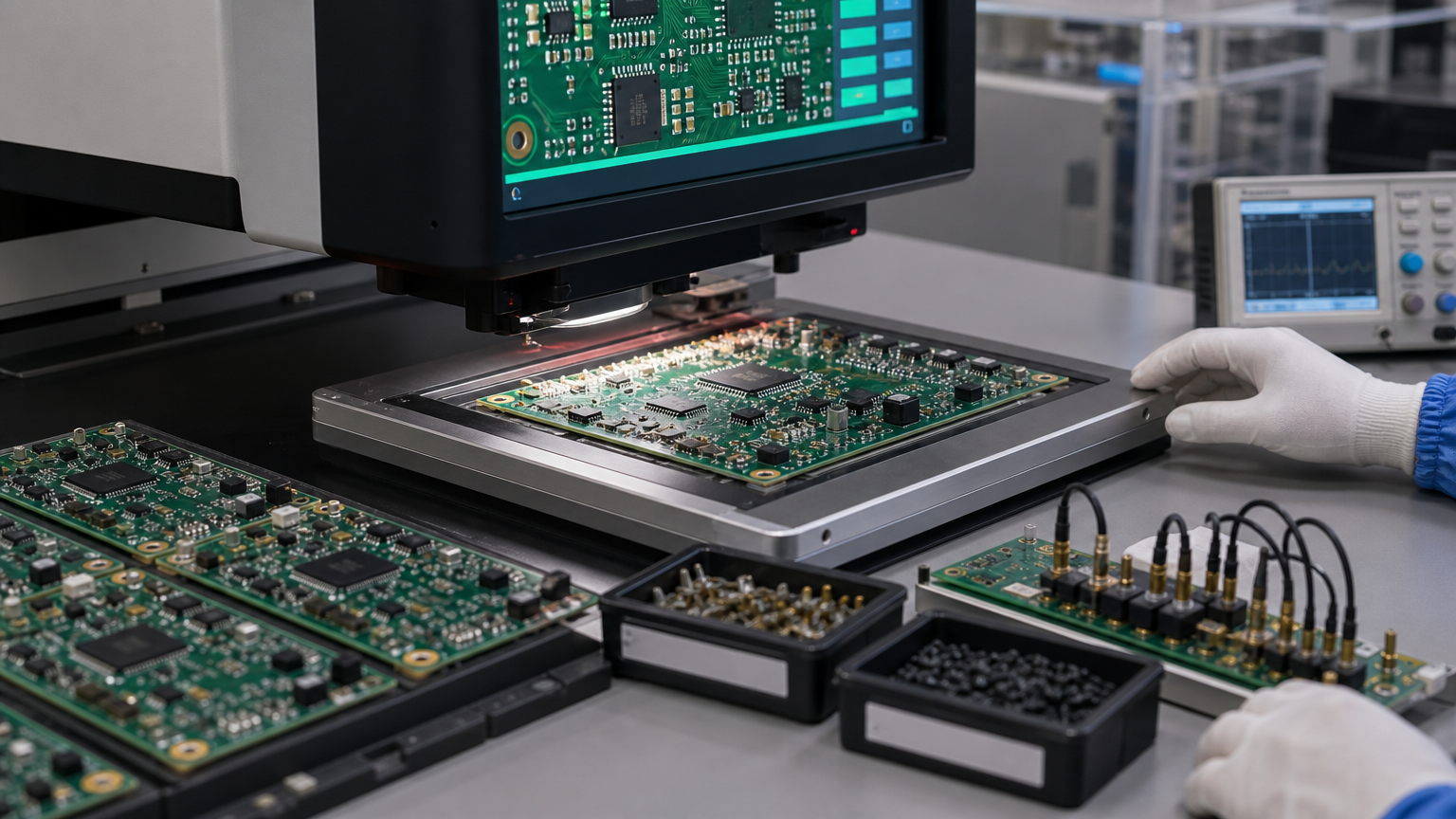
Flux chemistry left under fine-pitch packages does not care that the stencil process looked clean on AOI. Ionic residues plus humidity create leakage paths, dendritic growth, and coating adhesion failures months after a board ships looking cosmetically fine.
Overseas PCBA programs often skip wash because the paste is labeled no-clean. That shortcut works in dry consumer environments and fails on RF front ends, high-impedance analog, conformal-coated industrial boards, and anything that must pass ROSE or ion-chromatography limits.
Contamination is not one problem
Dust and handling soils need different treatment than activated flux residues. Corrosion products, water-damage minerals, and oils each respond to different chemistry. Identify residue type before choosing IPA wipe, aqueous saponifier, or a qualified engineered solvent.
"No-clean" means the process window assumes residues stay benign in the intended environment. It does not mean invisible ionic content is zero, nor that coating will adhere over greasy flux.
Methods that match production reality
Dry methods (ESD-safe brush, filtered air) remove loose debris without moisture risk. Solvent cleaning with high-purity isopropyl alcohol remains the practical bench and rework standard when used with lint-free wipes, controlled wetting, and complete drying.
Aqueous or semi-aqueous inline cleaners handle volume production when chemistry, rinse quality (deionized water), and drying tunnels are qualified to the flux system. Ultrasonic can reach under components but can damage crystals, MEMS, relays, and some electrolytics - datasheet permission matters.
Ionic contamination and acceptance
Reliability teams care about ions that support electrochemical migration. ROSE (resistivity of solvent extract) and ion chromatography quantify contamination against agreed limits. Visual gloss alone is a weak acceptance method for coated or harsh-environment product.
Document cleanliness requirements in the assembly note set the same way you document IPC class. Retrofitting a wash process after field returns is far more expensive than stating the limit up front.
Component and process cautions
Avoid soaking connectors, battery holders, and unsealed sensors. Limit liquid under large BGAs unless drying (time, temperature, or vacuum) is proven. Keep solvents away from open flames; IPA is flammable. Use ESD controls - cleaning benches are still electronics benches.
Never power a damp assembly. Trapped moisture under QFNs is a classic intermittent short after an otherwise successful wash.
Practical sequence for rework and small lots
Power down and remove batteries. Dry-clean first. Spot-clean with appropriate solvent and soft brushes. Refresh wipes so you remove soil instead of spreading it. Dry thoroughly, inspect under magnification, then test. For coated product, clean and dry to spec before coating; trapped residue under coating ages poorly.
If your RFQ includes wash, coating, or ionic limits, state flux type, cleanliness method, and acceptance test with the BOM. See PCB assembly and AOI. Submit process notes through how to place an order.