
The unit came back from the field with a familiar story: after a hard reset it powered fine for a few hours, then brown-outs returned under load. Maintenance swapped a fuse, reseated a connector, and shipped it again. Two weeks later the same board sat on the bench, still "working after reboot" until the next thermal cycle proved otherwise. That pattern is not a mystery firmware bug. It is a PCB telling you continuity is conditional -- and that the next power-on may finish a repairable fault into burned laminate.
For buyers and QA teams deciding repair versus remake after field failures, the useful skill is shop-floor inspection language: what you can see and smell with power off, which failure families look alike but need different decisions, and when a China fab remake beats chasing intermittent shorts.
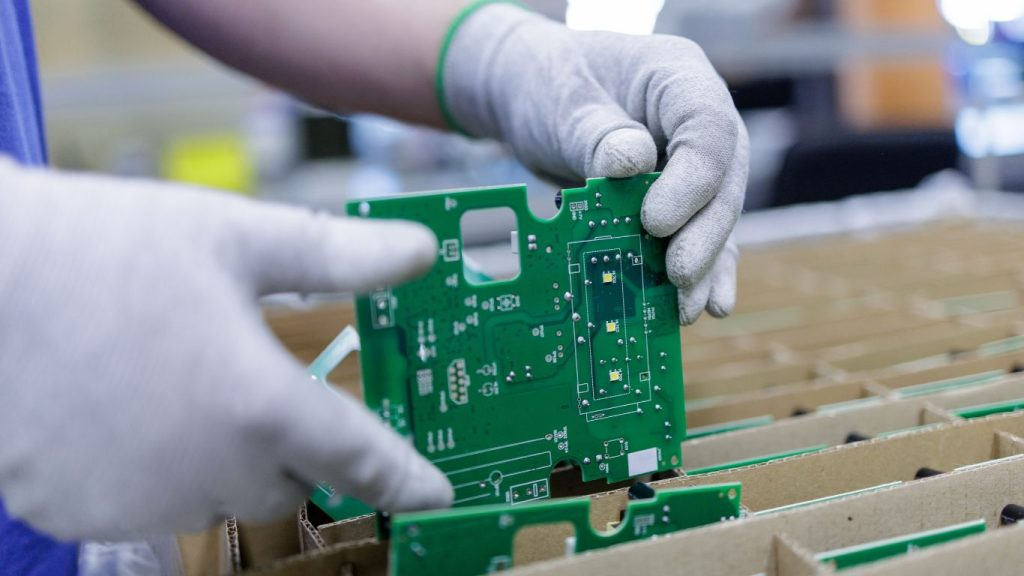
Unpowered first: look, smell, then magnify
Start cold. Good light and a loupe beat a hopeful power cycle. Scan both sides for darkened solder mask, char near regulators or power FETs, cracked IC packages, lifted pads, and board warp. Electrolytic capacitors that dome at the vent or weep residue at the base are already out of specification even if the product still boots. A fuse with blackened glass or a broken element is a symptom, not the root cause -- something downstream pulled excess current.
Smell the board before you plug anything in. A sharp acrid odor often tracks a cooked IC or resistor; a fishy or chemical note can point at leaking electrolyte. That odor means energy already went somewhere it should not. Powering a board that still smells burned risks carbonizing more laminate and turning a local part swap into a multilayer write-off.
Magnify connectors, mounting holes, and heavy parts that see vibration or cable strain. Dull, grainy solder fillets and hairline cracks at pads are easy to miss at arm length and common on boards that recover when cool. Check under shields and around battery holders where corrosion hides. Unpowered visual work is the cheapest filter between "swap one part" and "stop -- this substrate may already conduct where it should isolate."
Two failure families: heat damage vs power-rail collapse
Persistent heat and visible burn marks form one family. Darkened mask, charred parts beside high-current zones, and slight substrate warp mean the board ran outside safe limits long enough to change the material. On multilayer builds, heat can open vias, delaminate plies, and leave carbonized paths that leak even after the obvious part is gone. Once laminate looks burned, the structural and electrical integrity of that area is compromised; chasing the next failed regulator on the same board is often buying time, not reliability.
Power instability is a related but different story. Devices that refuse to start consistently, shut down under ordinary load, show irregular voltage on a rail, or keep killing fuses and regulators point at degraded current paths: fatigued traces, weak plating, failing capacitors that short rail to ground, or connectors that no longer carry return current. Continuity and resistance checks with power removed -- especially rail-to-GND -- confirm whether a short already exists. A near-zero ohm reading between a supply net and ground is a stop sign. Energizing that board without isolating the short can finish the burn the field already started.
Treat thermal scarring and rail collapse as separate diagnostic threads even when they appear together. Heat damage argues for substrate risk. Rail collapse argues for locating shorts and opens before any current-limited power attempt. Mixing the two into one "board is bad" label hides whether a local repair can still be trusted.
Intermittent behavior: solder fatigue versus corrosion
Boards that crash randomly, change behavior with temperature or gentle flex, or recover after a cool-down often have microscopic opens. Thermal cycling and vibration crack solder joints and via barrels. Expansion opens the crack in operation; cool-down closes it. The fillet may look only slightly dull until magnification. Connector pins and large mechanical parts are frequent sites. Prefer unpowered continuity across the suspect net and careful inspection at stress points before any powered flex experiment.
Corrosion and contamination tell a slower story. Moisture, ionic residue, and battery electrolyte dull copper, leave green or white deposits, and eat leads under components. Damage can radiate from a coin cell or board edge that sat in humidity. Cleaning may restore appearance without restoring every hidden path under an IC. Corrosion under fine-pitch parts and multilayer contamination raise remake probability because verification after repair stays uncertain.
Intermittent solder fatigue is often local and repairable when the net is accessible and low risk. Spreading corrosion, unknown moisture under BGA-class parts, or carbonized material after a short is not the same job -- even when both look like "it works until it gets warm."
Repair when the fault is local; remake when the laminate or vias are the fault
Simple, visible, single-net failures -- a bulged capacitor, one cracked joint on a connector, a blown fuse after the shorted part is identified and replaced -- are usually worth repairing when labor and risk stay below the cost and lead time of a new board. Shop practice often treats repair labor approaching half the price of a replacement assembly as the tipping point toward remake, especially once you add retest and the chance of a repeat field return.
Escalate to replace or remake when damage reaches the substrate or hidden interconnect: carbonized laminate, burned multilayer regions, damaged or cracked vias, shorted internal planes, repeated component deaths on the same nets, or power-to-ground leakage you cannot isolate to one part. Internal layer cracks and via barrel fatigue can look clean on the surface and still fail under load. At that point swapping the next FET only resets the clock on the next intermittent.
For production and field returns, ask whether the same signature appears on multiple serial numbers. A one-off handling crack differs from a design or process pattern that will burn the next batch the same way. Remake is not only a cost call; it is how you stop paying for the same short twice.
Remake RFQ notes that prevent repeating the burn
When you send a China fab a remake after field failure, attach more than Gerbers. Photograph the damaged zone before aggressive cleaning. Name the failure mode in plain language: rail-to-ground short after thermal cycle, char near the 12 V input, intermittent open at J3 under vibration, corrosion from a leaking cell. Call out current paths and duty that stressed the board. If thermal imaging or limited power tests already fingered a hot component, say so.
Ask CAM to review stackup, copper weight on power paths, via size and plating under hot pads, spacing where carbon tracking appeared, and whether conformal coating or a higher Tg laminate belongs on the traveler. Note any design change you will accept -- wider pours, moved heat sources, filled vias under power pads -- so the quote is not a clone of the board that failed. Include BOM and assembly notes if PCBA is in scope, plus the inspection depth you need on the replacement (AOI, flying probe, X-ray on hidden joints).
XFPCB treats that package as manufacturing input, not a complaint letter. A remake RFQ that documents how the old board died is how buyers avoid receiving an identical layout that will fail the same way in the same cabinet.
Field boards that only behave after a reboot are already negotiating their end of life. Unpowered look-smell-magnify work, separate reading of heat damage versus rail collapse, and an honest call between local part repair and laminate-level remake keep the next power cycle from writing off more hardware than you planned.