

PCB drill bits are usually a cemented-carbide cutting section on a steel shank for small diameters—wear resistance against abrasive glass, with brittleness as the price. Geometry then decides whether chips leave cleanly or the bit flexes and snaps. This is the parameter tradeoff map for overseas buyers and engineers. ST versus UC front-end families are the previous post.
Materials in one paragraph
Carbide cuts glass-epoxy well and chips if mishandled. Two-piece welded constructions are common under larger shank sizes to save carbide cost. Buyers rarely specify carbide grade; they specify hole size, AR and wall quality that force the fab’s tool and hit-count recipe.
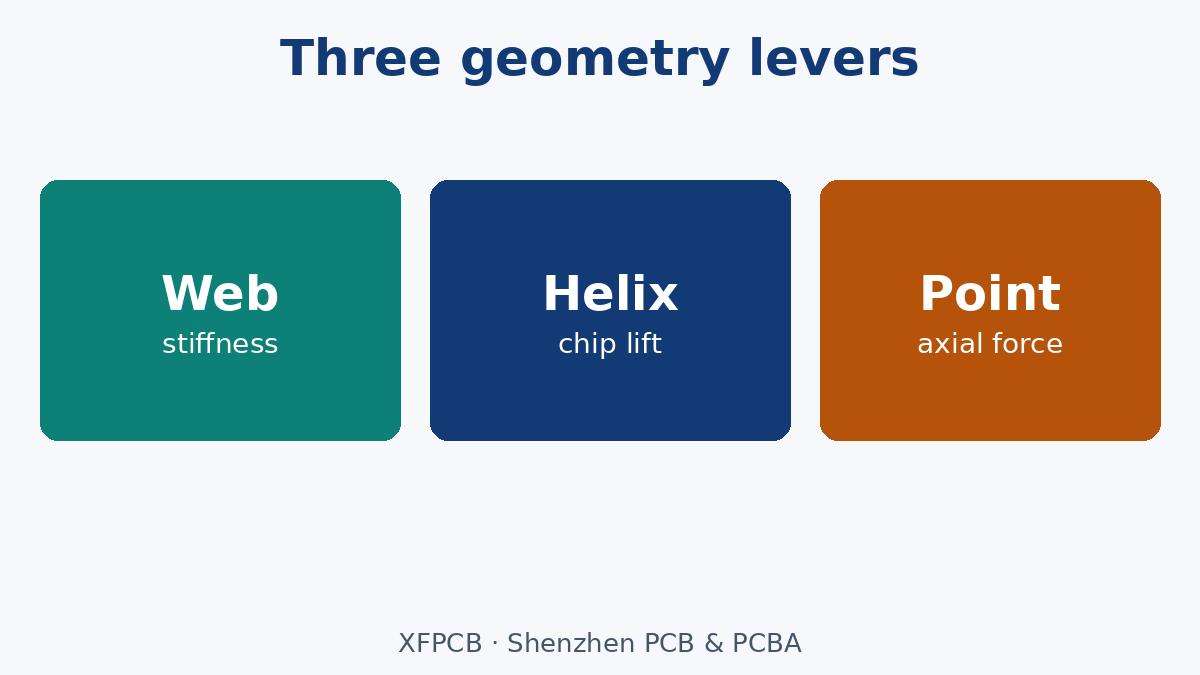
Geometry levers (no universal angle table)
Web thickness (core between flutes): thicker → more rigidity, less chip space; thinner → better evacuation, easier breakage.
Helix angle: larger → sharper effective rake and better chip lift, but less body stiffness and weaker edges; smaller → tougher edge, weaker evacuation.
Flute-to-body ratio: more flute room helps chips and walls; less flute room stiffens the bit.
Point angle: larger → chunkier chips and higher axial force, often easier eject toward the root; smaller → lower axial force and steadier position, spiral chips harder to clear.
Primary/secondary relief: more relief cuts freer with less rub; too much weakens the edge; too little rubs and heats the wall.
Why small, deep holes fail first
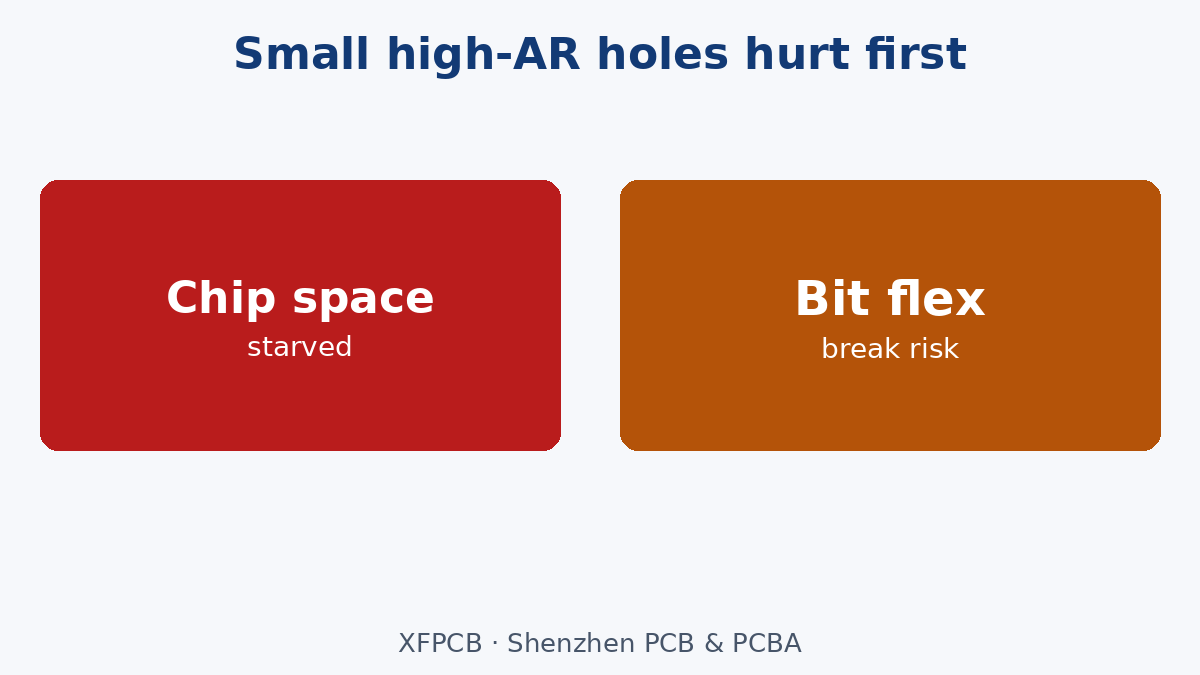
High aspect ratio and small diameter starve chip space and raise breakage risk. The fab answers with bit geometry, hit counts, backup/entry material, and sometimes UC bodies—not with a blog’s single “best helix.” If your drawing packs micro-drills at aggressive AR, expect EQ on stack, pad, or drill sequence.
What buyers should lock instead of angles
- Finished hole and tolerance class.
- Board thickness / AR context.
- Whether walls feed plating-critical features.
- Entry/backup expectations if you have a locked process.
Our PCB Fabrication Process and HDI PCB pages cover mechanical versus laser holes at the process level. Do not put helix degrees on the fab note unless you own a qualified tool drawing.
What we are not claiming
No invented helix/point degree tables, no carbide brand list, no claim that one geometry wins all laminates, and no regrind procedure. Understand the tradeoffs so EQ about breakage and smear makes sense—then let the drilling recipe stay with the plant.