
Dictionary articles define PCBA as “PCB plus components plus soldering.” Overseas buyers already know that. What they actually purchase on a China RFQ is a procurement object: a commercial package with ownership of travelers, EQ loops, yield, file freezes, and evidence—not a vocabulary lesson about SMT versus THT.
This article reframes PCBA for procurement and engineering leads who issue POs. Step-by-step line choreography (paste → place → reflow → selective → inspect) belongs in dedicated process-flow writing such as PCB assembly before and after the SMT line; kit ownership language lives in full turnkey vs consignment; when one commercial throat beats a split fab+CM lives in one-stop PCBA RFQ: when vs split; how test stacks change by stage lives in the proto→ramp→volume RFQ matrix; firmware as a named station lives in PCBA programming traveler RFQ. Here the job is different: what you are buying when you say “PCBA,” which scope map to freeze, which RFQ package stops silent assumptions, and which failure modes vague PCBA RFQs create.
PCBA as a procurement object (not a noun)
When you buy PCBA, you are buying (at minimum) a claim that a named party will:
- Build or receive a bare board to a frozen fab package.
- Install a frozen BOM (bought and/or consigned) onto that copper.
- Run a traveler of assembly and inspection steps you named—or that you accidentally left blank.
- Own (or explicitly refuse) yield between those steps.
- Hand you evidence that matches the freeze—or a packing list that only pretends to.
If those five are fuzzy, two “PCBA quotes” are not comparable. One includes programming verify and FAI paperwork; another includes paste and place only. Both say PCBA.
Treat the word as a label on a scope bundle. Force the bundle into the RFQ before you score price.
What you are actually deciding on the RFQ
Strip marketing and ask four ownership questions:
| Question | If unanswered, the plant assumes… | Buyer risk |
|---|---|---|
| Who owns fab copper? | “We will buy a board somewhere” | Wrong stack/finish; dual EQ |
| Who owns the kit? | “We will buy what we can” | Silent substitutes; allocation surprises |
| Who owns the traveler steps? | “Standard SMT” | Missing X-ray, FCT, program, coat |
| Who owns yield & evidence? | “Industry normal” | Unownable NCRs after ship |
PCBA procurement is the act of answering those four in writing. Assembly encyclopedias answer none of them.
Scope decision map: bare → partial → full
Use a map, not a slogan.
Bare board only. You buy fab. Assembly and kit stay elsewhere. Correct when fab process class is the specialty and your CM relationship is already strong. Wrong when you expected “boards ready to power.”
Assembly-only / consigned kit. You (or a 3PL) kit; the CM places and solders. Correct when AVL control or bonded inventory must stay with you. Wrong when your team cannot kit on time and the line idles.
Partial turnkey. CM buys commodity lines; you consign controlled ICs/connectors. Correct for hybrid risk. Wrong when the split lines are not labeled on the BOM.
Full turnkey / one-stop-style. One throat buys (within AVL), fabs or sources fab, assembles, tests as named. Correct for high ECO rate and thin buyer staff—see the one-stop vs split freeze. Wrong when regulatory kit rules forbid factory buy.
Turnkey + programming + FCT. Full traveler including image hash and powered gates. Correct when the product does not exist without firmware identity. Wrong when “test included” was only AOI.
Write the row you mean on the RFQ cover sheet. “PCBA” alone is not a row.
The RFQ package that prevents silent assumptions
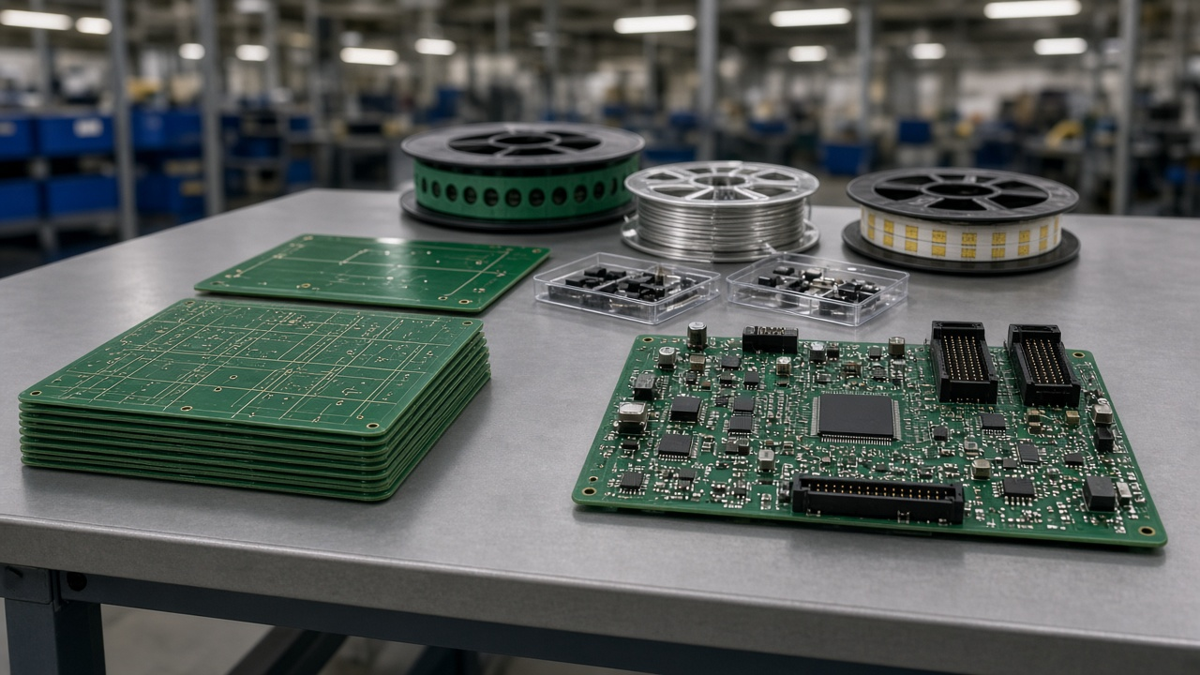
A procurement-grade PCBA RFQ attaches revision-locked artifacts:
- Gerber/ODB++ + fab notes — stack, finish, impedance, via architecture, class, panel intent.
- BOM + AVL — MPN, approved alternates, DNP, “may suggest / may not sub” flags.
- Centroid + assembly drawing — polarity, pin 1, keep-outs, press-fit, selective solder.
- Stencil policy — plant designs under rules, or you supply thickness/step intent.
- Traveler scope list — SMT sides, THT/selective, clean/coat, mark, pack.
- Test stack by stage — which methods at proto vs MP; sample vs 100%.
- Programming — slot, image hash, verify, UID/OTP if any.
- Exclusions — enclosure, system burn-in, cable, etc.
- ECO / substitution / fail disposition rules.
- FAI and lot evidence fields.
If item 2 or 6 is missing, expect the cheapest bidder to under-scope and the careful bidder to look expensive.
Failure modes of vague “PCBA” RFQs
Scope bait. Quote says PCBA; traveler is paste+place+AOI. You discover at receiving that FCT and programming were never priced.
Fab anonymity. “We include PCB” with no stack echo. You get a different Tg or finish than the prototype that passed EMC.
AVL theater. Factory optimizes BOM without change control. Field fails cluster on a substituted LDO.
Test theater. “100% tested” means power LED on. No limits, no logs.
Yield orphan. Defect after SMT blamed on fab you never contracted; defect after test blamed on design; no fail codes.
Revision skew. Copper Rev B, BOM Rev A, stencil Rev A. One-stop marketing, split reality.
Volume fiction. Proto unit price used to forecast MP without fixture NRE or AVL MOQ.
Each failure mode is cheaper to prevent with a freeze package than to litigate after air freight.
EQ loops and traveler ownership
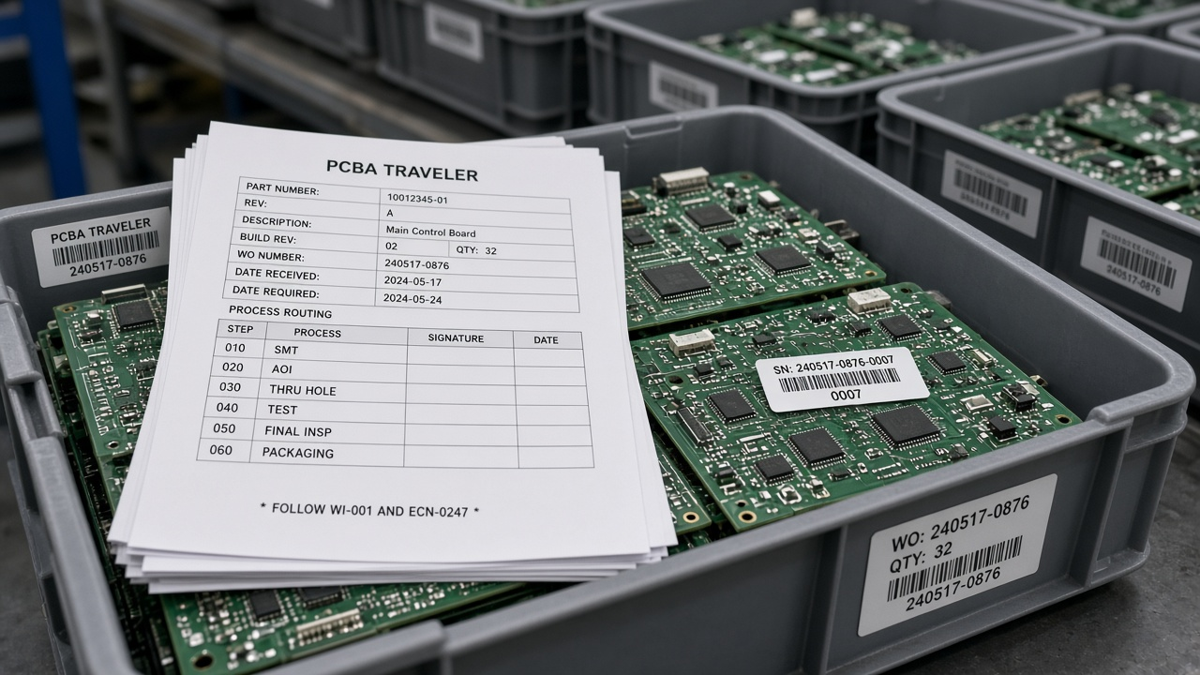
Procurement objects live or die in EQ. Under a clear PCBA buy:
- One ticket thread (or one merged package) ties fab CAM questions to SMT DFM.
- Alternates carry layout and purchasability notes.
- Stencil and panel notes update when pads move.
- Firmware/programming impacts appear when boot straps or debug access change.
If you are answering fab EQ in one mailbox and SMT EQ in another with no owner merging revs, you bought a split—even if AP has one vendor ID. That is a procurement design error, not bad luck.
Yield responsibility: write it before the defect
Agree in the PO who eats which defect classes:
| Defect class | Typical owner if frozen | If unfrozen |
|---|---|---|
| Bare-board open/short escaping fab test | Fab party named on PO | Argument |
| Wrong MPN / unauthorized sub | Buyer of that line (CM or you) | Argument |
| Solder joint cosmetic per IPC class named | CM process | Argument |
| Program verify fail with good contact | Image/process per programming freeze | Reflash loops forever |
| Functional fail after structural pass | FCT procedure vs design boundary | Blame ping-pong |
PCBA procurement without yield language is a hope that everyone is nice. Nice does not survive a late shipment.
Silent assumptions checklist (print beside the RFQ)
Before you release the RFQ, force a yes/no on each silent assumption plants commonly make:
- Board finish and thickness class match the prototype that passed EMC/thermal—not “equivalent FR-4.”
- Moisture-sensitive devices follow a named MSL bake/floor-life policy after kit open.
- Both SMT sides (if any) and the THT/selective path are priced—not assumed single-side only.
- Connector and press-fit operations are in or out; “assembly” does not silently exclude them.
- Conformal coat and cleaning chemistry are in or out; coat after program access is called out if both exist.
- Panelization and depanel method are agreed enough that fiducials and keep-outs match the stencil plan.
- First-article quantity and hold-lot rule are written so MP does not start on an unreleased setup.
- Packaging (ESD bags, humidity cards, carton drop class) matches the Incoterms you named.
Each “unspoken yes” is a free option the plant may not have included. Convert them to written scope or explicit exclusions.
How PCBA procurement differs from buying a bare PCB
A bare-PCB buy primarily freezes stack, drill, finish, and electrical test of copper. A PCBA buy adds time-dependent kit risk, machine programs, thermal profiles, and software identity. That is why a perfect fab PO plus a vague assembly line item still fails: the hard problems moved to the traveler. Score PCBA vendors on EQ quality and evidence discipline as much as on placement brand names. Placement machines are common; ownership clarity is not.
Where process-flow detail belongs
Buyers still need to understand paste, place, reflow, selective solder, and inspection gates—but that detail is process literacy, not the procurement definition of PCBA. Use process-flow articles and SMT line write-ups when you negotiate stencil thickness, nitrogen, or AOI coverage. Use this frame when you negotiate what the PO owns. Mixing the two creates RFQs that read like textbooks and still omit AVL and evidence.
When you are ready to walk station order and before/after SMT handoffs, use dedicated assembly-flow material rather than stuffing a dictionary into the commercial freeze.
Proto vs volume: the procurement object changes on purpose
Same product can be three different PCBA buys:
- EVT: assembly-heavy learning; thin test; expect ECO; avoid MP fixtures.
- Ramp: prove the MP traveler on real process; measure false-fail; harden AVL.
- MP: frozen rev; fixtures where payback is real; evidence retention.
State the stage on the RFQ so bidders do not price a volume ICT nest for a board that will respin. The test-stack matrix exists to change policy on purpose; the procurement object must change with it.
Cost lines that belong on a PCBA comparison sheet
Ignore vanity CPH and brochure defect rates. Compare:
- Material liability and MOQ.
- NRE: stencil, fixtures, program algorithms, FCT nest.
- ECO administrative path.
- Scrap ownership fab-after-SMT.
- Evidence depth (FAI + lot logs).
- Lead time basis (kit ready + ECO freeze—not a naked calendar date).
A higher unit price with clear ownership often beats a low PCBA number that assumed you would consign, self-program, and skip FAI.
Scorecard for “PCBA” quotes
| Line | Pass | Fail |
|---|---|---|
| Scope echo | Restates your traveler list | “PCBA service” only |
| Kit model | Full / partial / consignment named | Silent |
| Fab identity | Site or fab notes echoed | “PCB included” |
| Test/program | Methods + hashes/sample | “100% test” |
| Yield/ECO | Written rules | Omitted |
| Evidence | FAI + lot fields | COC only |
Disqualify fails before negotiating pennies on passes.
Receiving: prove the object you bought
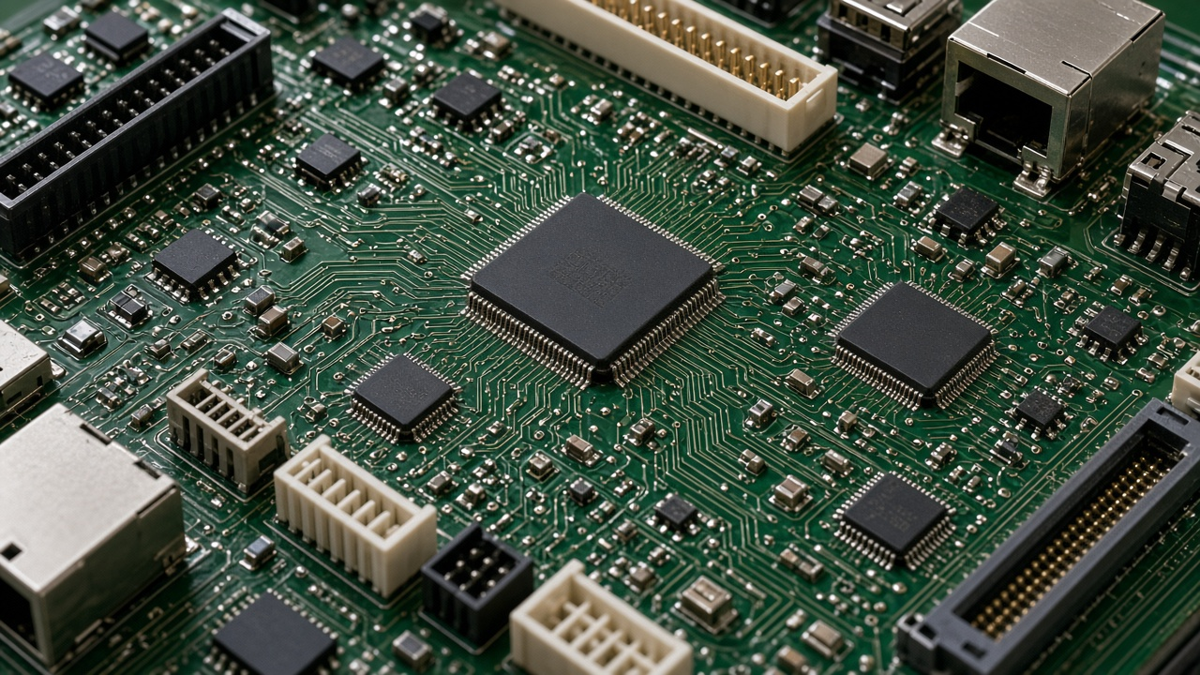
At dock:
- Rev labels match the freeze package.
- Critical MPNs sample-check against AVL.
- If programming was in scope, spot-check identity or demand station logs.
- Open NCRs with fail codes and ownership references—not “poor quality” as a vibe.
Procurement closes when evidence matches scope—not when the pallet arrives.
Also confirm who pays for engineering hours after award—EQ rounds, stencil respins, and program algorithm tweaks—are often excluded from a cheap PCBA unit price and then invoiced as “NRE surprises.” Put a monthly EQ hour cap or a bundled NRE table in the RFQ so both sides price the same conversation load.
Freeze checklist before the PCBA RFQ leaves your desk
- Scope row named (bare / assemble-only / partial / full / full+program/FCT).
- Kit model named.
- Fab ownership named.
- File package complete (Gerber, BOM/AVL, centroid, assembly drawing).
- Traveler steps listed; exclusions listed.
- Test stack stage named.
- Programming in or out with hash rules.
- Yield / ECO / sub rules written.
- FAI + lot evidence written.
- Quote scorecard prepared so AP does not buy the lowest undefined line.
What to decide on the next PCBA PO
Do not start from “remind me what PCBA means.” Start from ownership:
- If you need one throat for copper+kit+traveler+evidence, freeze a full turnkey/one-stop-style object with the file package—and use the one-stop vs split gate when fab specialty argues otherwise.
- If you must control the kit, freeze consignment/partial and still freeze traveler, test, and yield—assembly-only is not “no documentation.”
- If firmware identity matters, freeze programming as part of the object, not as a friendly extra.
Encyclopedias explain SMT and AOI. A PCBA procurement-object freeze—scope row, ownership answers, RFQ package, failure-mode checks, and evidence—decides whether the boards you receive match the product you think you bought. When stage, AVL policy, or test depth changes, reopen the freeze; do not inherit last PO’s vague “PCBA” line onto a serialized, programmed, regulated build.