
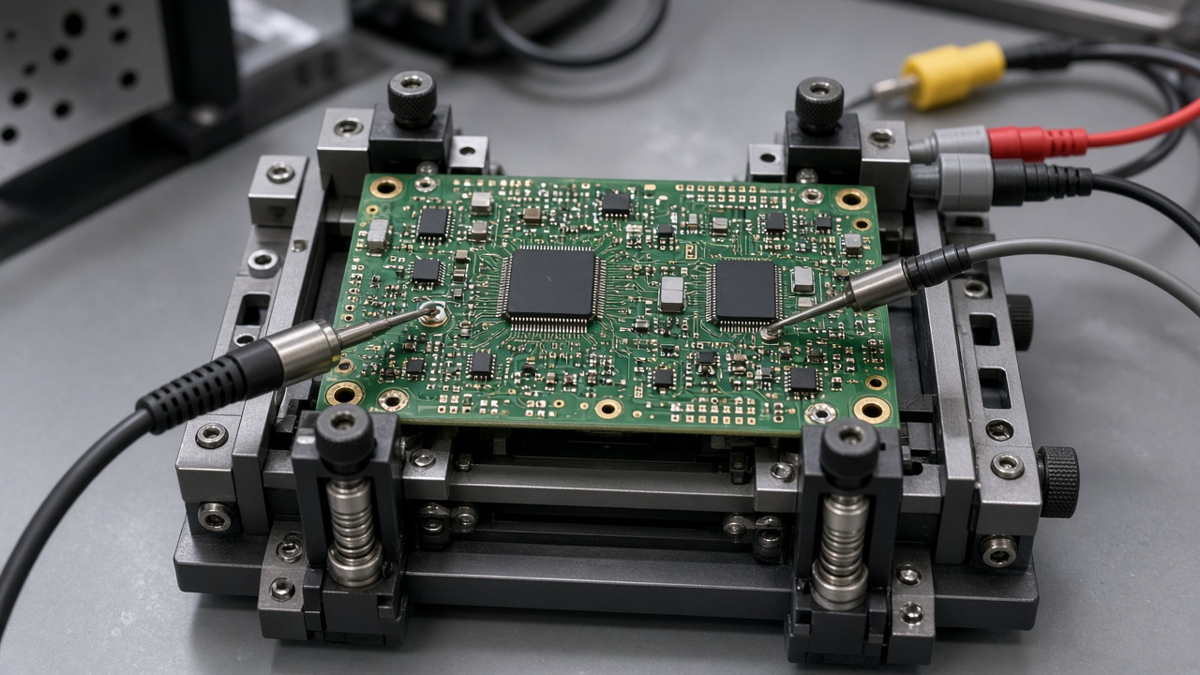
A method catalog will tell you that ICT is fast, flying probe needs no fixture, AOI sees solder, and FCT powers the board. Overseas buyers already know those slogans. What burns schedule and margin is running a mass-production test stack on a revision-unstable prototype—or shipping volume with a prototype stack that never grew fixtures, DFT pads, or an acceptance matrix the CM can execute the same way twice.
This article is the stage gate. Method definitions and when each technique earns a line on the PO live in the PCB testing methods guide and the inspection/test menu risk map. Where gates sit in the assembly flow lives in PCBA inspection checkpoints. Pad access and nets probes never see live in DFT pads and probe access. Powered functional scope lives in functional circuit testing. Here the question is different: how do you build a test stack that changes on purpose from prototype → ramp → volume, price fixtures at the right time, and write an RFQ acceptance matrix that matches the stage you are actually buying?
Stages are test policies, not calendar labels
Call them EVT / DVT / PVT / MP, or proto / pilot / ramp / volume. What matters is the stability of three things:
- Schematic and firmware that FCT (if any) will exercise.
- Layout revision that defines pad locations, keep-outs, and panelization.
- Expected repeat count of the same revision (tens, hundreds, thousands).
If any of those three is still moving weekly, you are still in a prototype-class test policy even if marketing calls the build “pilot.” If all three are frozen and the next order is the same traveler, you are in a volume-class policy even if the absolute quantity is modest.
| Stage class | Layout / FW stability | Honest test posture | Fixture posture |
|---|---|---|---|
| Prototype / EVT | Expect respins | Maximize learning per board; prefer flexible access | Avoid dedicated ICT nails; flying probe + AOI + limited bench FCT |
| Ramp / DVT–PVT | Mostly frozen; small ECOs | Prove the MP stack on real process; measure false-fail rate | Soft tooling, reusable nests, decide ICT go/no-go |
| Volume / MP | Frozen rev + process | Throughput, repeatability, traceability | Dedicated fixtures where payback is real; FCT as product gate |
The expensive mistake is buying MP fixtures before the pad map freezes—or never leaving flying-probe-only after the pad map and volume both freeze.
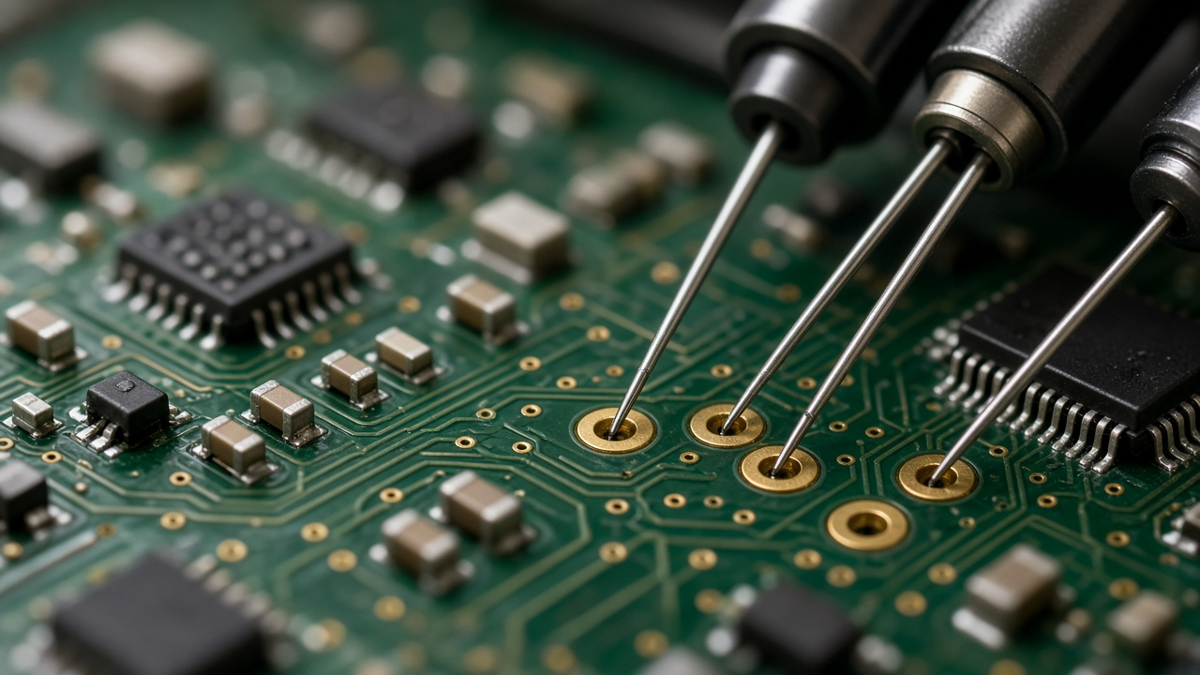
What each stage is trying to prove (not “more testing”)
Prototype — prove the design and the process can be tested
Goals:
- Catch bare-board opens/shorts before you solder a scarce BOM.
- Catch gross SMT defects early (SPI/AOI as process feedback, not as theater).
- Learn which nets are inaccessible so DFT can be fixed on the next spin.
- Run a thin functional smoke test if bring-up needs it—not a full production FCT script.
Non-goals:
- Cycle-time optimization.
- Perfect coverage percentages on a board that will change.
- ICT fixture ROI.
Ramp — prove the production stack before you scale
Goals:
- Run the same gate sequence you intend for MP (minus maybe full ICT if not yet tooled).
- Measure false fails: AOI overkill, flaky FCT firmware, marginal probe contact.
- Freeze which defects are stop-the-line vs disposition with MRB.
- Decide fixture investment with data from real boards, not slides.
Non-goals:
- Inventing a second parallel “engineering only” test path that volume will never run—escapes hide there.
Volume — prove each board against a frozen acceptance matrix
Goals:
- Stable cycle time and probe contact.
- Traceability: which gate failed, which program rev, which fixture rev.
- Continuous control of false-fail rate so capacity is not eaten by ghosts.
- ECO control: test program and fixture change with the board rev, not ad hoc.
Non-goals:
- Re-debating method catalogs every PO. The matrix is the contract.
Coverage vs false-fail cost: the trade buyers under-price
More gates and tighter limits feel safer. They also create false fails—boards that are good product but fail a noisy threshold, dirty fixture, outdated golden image, or brittle FCT script. False fails cost:
- Debug labor and line stops.
- Unnecessary rework heat on good joints.
- Distrust of the test (operators start “retesting until green”).
- Hidden capacity loss that looks like “yield” but is measurement noise.
True escapes cost warranty and reputation. The stage-gated buyer does not maximize coverage slogans; they set which failure classes must not escape at this stage, and they budget time to stabilize the gates that catch those classes.
Practical rules:
- Prototype: tolerate higher manual review; do not harden aggressive AOI recipes that will thrash on every spin.
- Ramp: intentionally stress the MP limits on a sample; log false-fail causes; fix recipe/fixture/firmware before volume.
- Volume: change limits only under ECO; track false-fail rate as a process metric next to first-pass yield.
If a CM cannot separate “defect” from “test noise” in their reports, you do not yet have a volume-ready stack—you have a sorting station.
DFT and fixture economics: spend when the pad map stops moving
DFT timing
Test pads, open mask, and boundary-scan access are layout decisions. Adding them after the third respin is how teams stay on slow flying probe forever. Conversely, over-populating nails targets on an EVT board that will move pads next week wastes engineering time.
Stage rule:
- Before EVT layout freeze: place pads on power, ground, programming/debug, and nets that will never be reachable through connectors or JTAG. Follow the DFT pad guide for what probes can actually land on.
- Before ramp: freeze pad diameters, keep-outs from tall parts, and panel fiducials that fixtures will use.
- After MP freeze: treat pad moves as fixture ECOs, not “small silk changes.”
Fixture payback without invented dollar claims
ICT bed-of-nails and hard FCT nests pay when:
- The same revision will run enough repeats that programming + fixture build is cheaper than cumulative flying-probe or bench time.
- Pad access is stable and dense enough that nails coverage is real.
- False-fail rate on soft tooling is already low enough that a hard fixture will not just amplify noise.
They do not pay when:
- Revision letters still change monthly.
- Critical nets have no pads (fixture cannot invent access).
- Volume is episodic one-offs with different assemblies.
Ramp is where you collect the evidence: time per board on flying probe or soft FCT, ECO frequency, and escape/false-fail history. Then you choose ICT / hard FCT / stay flexible. Quoting ICT on the first prototype PO is usually optimism, not economics.
Soft tooling bridge
Reusable nests, pogo clamshells on connectors, and partial fixtures often carry ramp. They teach contact and FCT script issues without full nails cost. Plan them as explicit ramp assets on the RFQ so the CM does not skip straight from bench hooks to “we need ICT next week.”
Building the stack by stage (composition, not catalog)
Think in layers that stay or graduate:
| Layer | Prototype | Ramp | Volume |
|---|---|---|---|
| Bare-board electrical | Flying probe or nails per fab norm; require pass record | Same method as MP fab will use | Locked method + coupon/traceability as agreed |
| Print / solder process gates | SPI/AOI as feedback | Recipes toward MP limits | Frozen recipes; SPC on key defects |
| Hidden joints | X-ray sample or 100% by risk class | Confirm MP rule | Frozen rule |
| Structural electrical on PCBA | Flying probe if pads exist; skip ICT | Soft fixture or decide ICT | ICT if justified; else optimized flying probe |
| Functional | Smoke / bring-up script | Production-intent FCT draft | Frozen FCT + fixture rev |
| Reliability extras (burn-in, etc.) | Only if product risk demands learning | Sample plan | Frozen sample or screen plan |
Do not copy a competitor’s “AOI → ICT → FCT” slogan into every stage. Prototype without pads cannot do meaningful ICT. Volume without FCT on a firmware product often ships structural-pass bricks. Stage the composition.
RFQ acceptance matrix: what “pass” means at this stage
An RFQ that says “100% test” is not a matrix. Write rows the CM can price and the FA can verify. Adapt the columns; keep the idea: stage, gate, method, coverage intent, sample/all, record, fail disposition.
Example matrix skeleton (fill with your product—do not treat as universal law)
| Stage | Gate | Method | Intent | All / sample | Record required | On fail |
|---|---|---|---|---|---|---|
| Proto | Bare board | Flying probe / e-test | Opens/shorts on netlist | All panels/boards as quoted | Pass file tied to panel ID | Scrap / repair per fab rule |
| Proto | SMT visual/structural | AOI (± SPI) | Gross place/solder defects | All | AOI log + false-fail note if heavy | Rework / wash-reprint |
| Proto | Hidden joints | X-ray | BGA/QFN sample learning | Sample N boards | Images + callouts | Process fix before next spin |
| Proto | Functional | Bench smoke | Boots / key I/O | Sample or all if scarce | Script rev + operator notes | Engineering disposition |
| Ramp | Same gates as MP draft | As MP | Prove cycle + false-fail | All for structural; FCT as draft | Full logs + false-fail Pareto | Stop line if systematic |
| Ramp | Fixture decision | — | ICT / hard FCT go-nogo | Data package | Time study + ECO forecast | Tool or stay flexible |
| Volume | Bare board | Locked | Netlist integrity | All | Traceable pass | No silent skip |
| Volume | AOI / X-ray | Locked recipes | Solder/place classes named | All or risk-based as frozen | Recipe rev on traveler | MRB only per written code |
| Volume | ICT or FPT | Locked program | Named coverage (pads/nets) | All | Program rev + fixture rev | Retest limit then MRB |
| Volume | FCT | Locked script | Named product functions | All | Script/firmware rev + results | No “reflash until green” without rule |
Attach the matrix to the RFQ and require the quote to mirror it. A price that assumes “AOI only” while your matrix shows FCT is not a comparable bid.
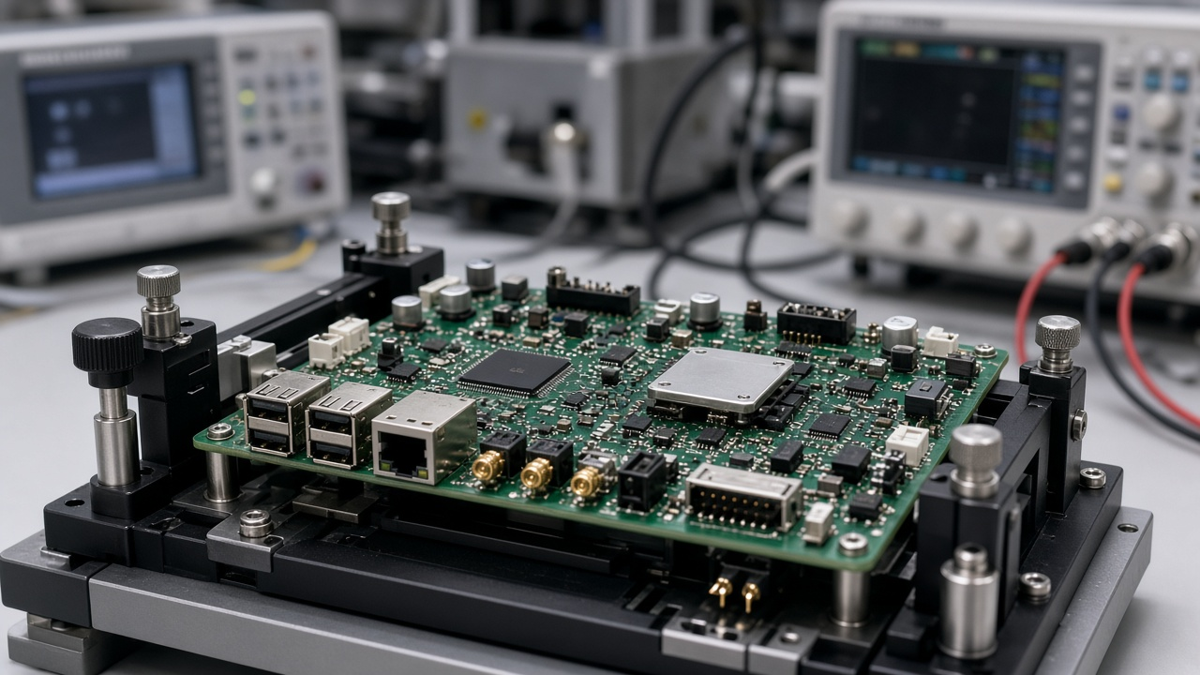
Acceptance language that prevents silent downgrades
Put in writing:
- Which gates are mandatory for this stage vs optional engineering extras.
- That “equivalent test” requires buyer approval—not CM substitution of flying probe for agreed ICT without ECO.
- Firmware / test-script revision control for FCT (same discipline as board rev).
- Retest limits (how many times a board may be retested before MRB)—this is where false-fail culture hides.
- First-article package: matrix rows executed, sample logs, open false-fail list.
False-fail and escape: stage-specific controls
| Problem | Prototype control | Ramp control | Volume control |
|---|---|---|---|
| AOI false fails | Loose recipe OK; engineer reviews | Tune to MP; log top nuisance codes | Frozen recipe; change via ECO |
| Flying probe contact | Accept slower; clean pads | Standardize pad finish/keepout | Fixture or probe maintenance plan |
| ICT false fails | N/A if no fixture | Soft prove contact maps | Fixture cleaning / pin replacement schedule |
| FCT flakes | Engineering script | Stabilize power limits, cable wear, FW | Golden unit + cable life + script ECO |
| Escapes after “pass” | Expect some; feed next spin | Root-cause each escape into matrix | 8D into gate that should have caught it |
Escapes that keep recurring at the same gate mean the matrix row is wrong—not that you need “more methods” in the abstract.
China CM RFQ package for a stage-gated stack
Send more than Gerbers:
- Stage declaration — proto / ramp / volume (or EVT–MP) and expected repeat of this revision.
- Acceptance matrix — table above, filled.
- DFT status — pad map frozen or not; boundary scan available or not.
- Fixture status — none / soft / hard ICT / hard FCT; who designs and who pays; lead time assumptions as questions, not invented weeks.
- Firmware & FCT ownership — who supplies scripts, golden boards, adapters.
- False-fail policy — retest limits and who may relax limits.
- Traceability — board ID ↔ gate results retention expectation.
- ECO rule — board rev change forces test program / fixture rev review.
Ask each bidder to price by matrix row, not one blurry “testing” line. That is how you see who omitted FCT or assumed nails you do not want yet.
Decision worksheet before the next PO
Work top to bottom; stop when the stage policy is clear.
- Which stage class is this PO? (stability of layout, firmware, repeat count—not the marketing name)
- What must not escape at this stage? (safety, brick-on-arrival, process defects you can still cheaply fix upstream)
- What DFT exists today? If pads are missing for the coverage you want, fix layout or accept flying-probe/FCT limits—do not buy ICT fantasy.
- Is fixture payback plausible on this revision? If no, stay flexible; if yes, schedule tooling in ramp, not as a surprise on the MP PO.
- Where will false fails come from? Name the noisy gate and put a ramp task to quiet it.
- Does the RFQ matrix match the stage? Proto matrices that demand full ICT + burn-in + full FCT on a moving rev are how quotes diverge and schedules slip.
- Does the quote mirror the matrix row by row? If not, reject or re-bid before award.
Fill those answers into the traveler. Method encyclopedias do not ship boards—stage-correct stacks with an acceptance matrix do. When the stage changes, change the matrix on purpose; do not inherit last quarter’s volume gates onto next week’s prototype, or next year’s volume onto a fixture you never funded.