
“Offshore versus USA assembly” is usually argued with wage tables, freight anecdotes and a scoreboard of who “owns” quality. Those debates burn time and still leave the PO ambiguous. The decision that survives contact with a real line is simpler: what must be locked so either a local house or an overseas factory can build the same intent—and when location is forced by law or by iteration physics, not by a blog comparison.
XFPCB is a China PCB and PCBA factory writing for overseas buyers and engineers. This is an honest buyer guide from that seat. It is not a claim that China always wins, not a claim that the United States always wins, and not a table of invented hourly rates or container percentages.
Lock the package before you lock the map
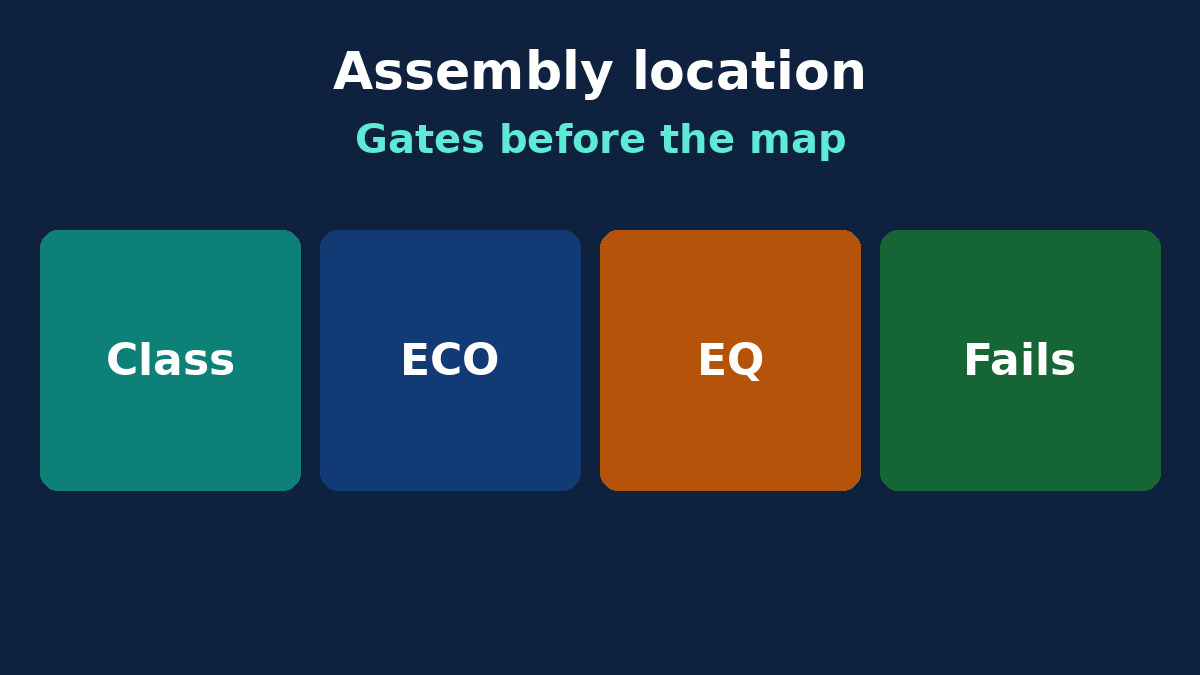
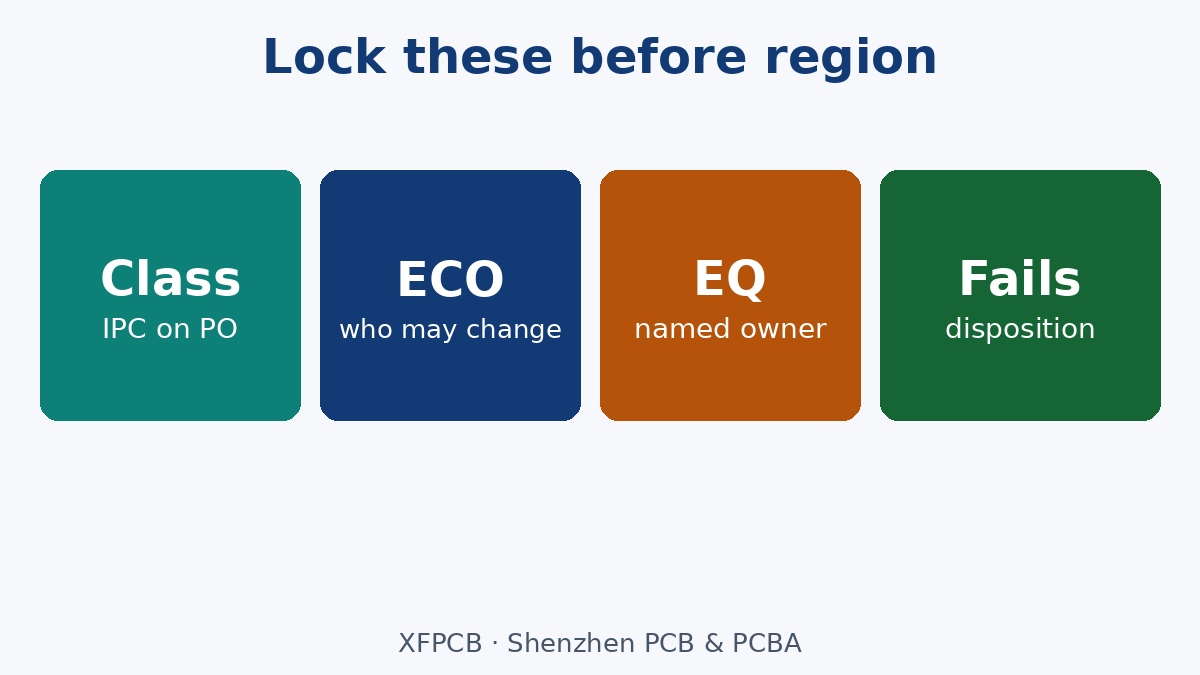
Compare regions only after these four items are written. Without them you are comparing quotes that describe different jobs.
Workmanship and class. Name the IPC acceptance class on the assembly drawing and the PO (for example IPC-A-610 Class 2 or Class 3 for the product you actually ship). “IPC certified” as a brochure line is not a class callout. The class decides solder criteria, not the passport of the building.
Change control. Who may release an ECO, how a BOM alternate is approved, and whether the factory may buy a form-fit alternate without your signature. Offshore and local both fail the same way when alternates are verbal.
EQ owners and clock. Engineering questions need a named responder on your side and a written answer path. Calendar delay after award is usually unanswered EQ, not the ocean.
Fail and sample disposition. What happens to a failed board, who keeps golden samples, and whether a pilot lot must be approved before volume. Shipping a fail back across a border without a disposition rule is schedule drama, not quality theatre.
When local assembly is the rational default
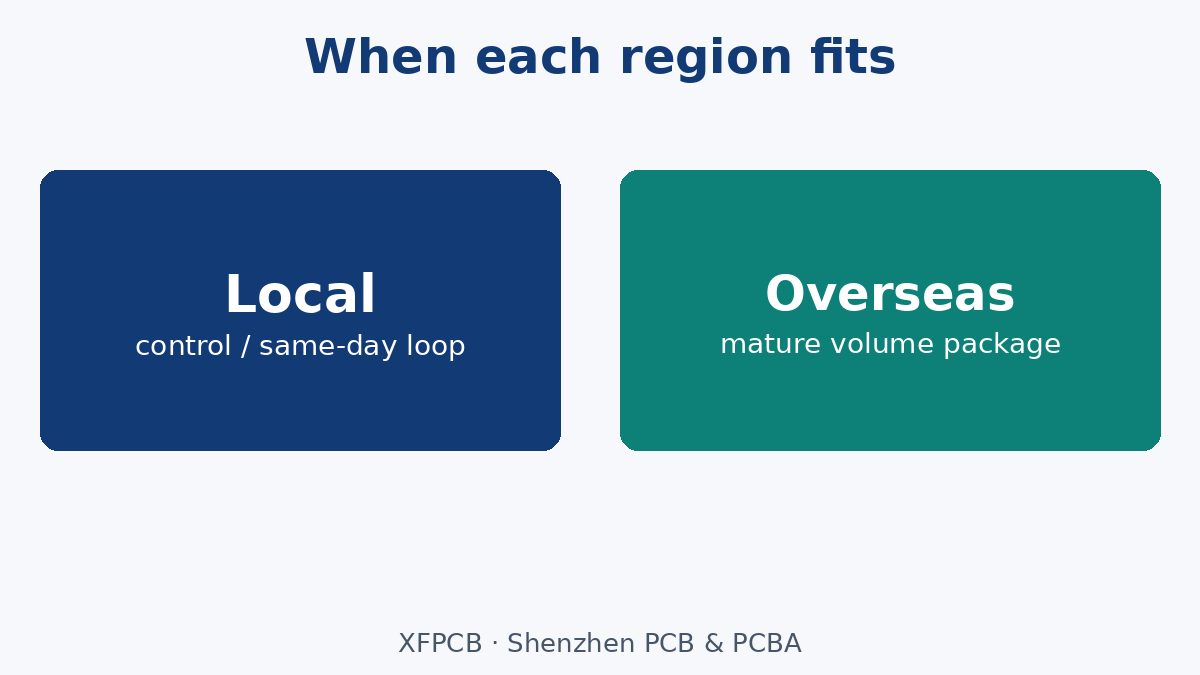
Stay with a qualified local assembler when any of these dominate the program:
- The technical data or end use is export-controlled or otherwise must remain in a defined domestic supply chain. That is a compliance decision with counsel and a qualified source—not a cost spreadsheet, and not something a China factory should bid as if paperwork were optional.
- You need same-day physical iteration with engineers who share a building or a metro area: repeated hand-carried spins where air freight still loses a day you do not have.
- Contract, liability and discovery rules must sit in one legal system you already use for the product. Venue is a business choice; write it, do not imply it from a logo.
Those cases are real. They are also narrower than “offshore is risky.” Risk without a locked package is not geography—it is undefined work.
When an overseas (China) turnkey line is a rational default
A China factory is often the right industrial fit when:
- Volume, panelization and a mature AVL make labor and process density matter more than same-day hand-carry.
- Fab and assembly can sit on one traveler with one EQ loop (our PCB Assembly scope), and you already accept calendar for freight plus customs.
- You want purchasing scale on commodity SMT lines with written alternates, not a wage myth.
Our USA vs China PCB page is the broader fab-location conversation. This post is assembly-location gates: same board intent, different building, same need for a frozen package.
Quality is evidence, not a flag
IPC-A-610 (and related assembly workmanship practice) is the usual language for how a joint is judged. Ask for the class on the PO, the inspection plan (AOI, X-ray sample, ICT/flying probe, functional), and how a fail is dispositioned. A shared legal system helps enforcement; it does not invent a test that was never quoted. An overseas line with a written plan and retained samples can be more traceable than a local line that ships on tribal knowledge.
Communication is timezone and language plus discipline: one EQ log, one revision of Gerbers and BOM on the traveler, and responses in writing. Discipline travels. Chat that never becomes a drawing note does not.
Intellectual property without slogans
NDAs, limited file access, and a clear list of who may receive Gerbers and BOMs matter in every region. They do not replace export-control classification when that applies. If the program is controlled, follow that path with a qualified domestic source. If it is not, still treat the files as controlled inside your AVL: watermarked releases, revision locks, and no “send the latest zip to whoever is quoting.”
Prototypes, batches and freight—without invented numbers
Early spins that change every week often favor a local or regional quick-turn loop so each ECO does not wait on an ocean schedule. Stable pilot and volume builds often favor an overseas turnkey line once the package is frozen. Freight and fuel move; that is why a quote should separate unit process cost, materials, test and logistics instead of one blended number you cannot audit. We are not publishing wage or freight percentages here—those change and are easy to misuse.
What this post refuses to claim
No hourly wage tables, no “X% of world PCB capacity,” no claim that domestic is always higher quality, no claim that offshore is always cheaper at scale, and no ITAR or AS9100 capability claim for XFPCB. Controlled aerospace and defence work belongs with sources qualified for that work; do not read this guide as a substitute for that path.
Pick the region after class, ECO path, EQ owners and fail disposition are written. Then the map is a choice about iteration physics, compliance and industrial fit—not a flag contest.