
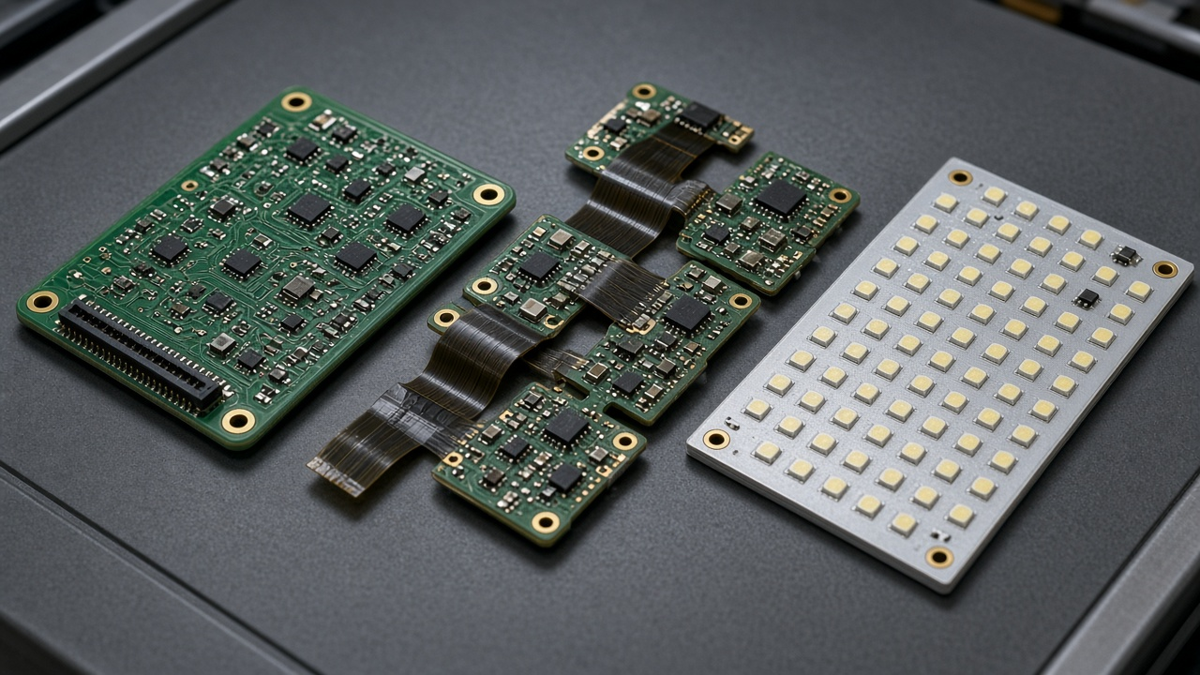
Taxonomies list single-sided, double-sided, multilayer, flex, rigid-flex, HDI, metal-core, and backplanes as if the job were memorizing names. Overseas buyers lose money when the wrong construction class is frozen on the RFQ: a rigid board asked to replace a harness, an HDI quote that was really “more layers please,” a metal-core chosen because it sounded premium, or a stiffened flex that should have been true rigid-flex. The plant then prices a different process book than the product needs—or ships a build that fails connectors, bend life, thermal paths, or via aspect in the field.
This article is a construction-class decision freeze for buyers and program engineers. It is not a catalog of definitions. Form-factor selection among rigid / FPC / rigid-flex is covered in depth in rigid vs FPC vs rigid-flex. Stiffened multilayer flex versus true rigid-flex is covered in multilayer flex with stiffeners vs rigid-flex. Subtractive versus HDI build-up language lives in PCB manufacturing method selection. Here the focus is forcing functions, wrong-class failure modes, and RFQ callouts that change which quote class you are in.
Construction class is a process book, not a brochure checkbox
When a China fab reads “PCB,” CAM assigns a route: rigid multilayer FR-4-like, flex film, rigid-flex lamination, HDI microvia build-up, metal-core dielectric-on-metal, or a specialty hybrid. Each route has different travelers, drill/laser steps, inspection, and scrap modes. Writing “HDI or multilayer, whichever cheaper” without stating whether you need microvias, sequential lamination, or only more routing layers puts two process books into one bid—and you cannot compare prices.
| Class you think you bought | What the plant must actually run | Quote lies if missing |
|---|---|---|
| Rigid multilayer | Subtractive etch, PTH, standard press | Layer count / copper / impedance only |
| Flex (FPC) | Coverlay, flex materials, bend-aware panel | Bend class, stiffener, ZIF thickness |
| Rigid-flex | Combined rigid + flex process, transitions | Transition count, bend, IPC type |
| HDI | Laser microvias / build-up sequences | Via structure, not just “dense” |
| Metal-core | Metal plate + thin dielectric + Cu | Metal type, dielectric thermal class |
| Hybrid RF / mixed | Multiple material families | Bondply and process deltas |
Freeze the class before arguing mils and dollars.
Decision tree: start from the forcing function
Walk top-down. Stop at the first hard force; do not collect every buzzword.
1) Must the interconnect bend, fold, or replace a harness?
- No, fixed enclosure, connectors OK → stay in rigid (or metal-core if thermal forces it). Do not buy flex “for modernity.”
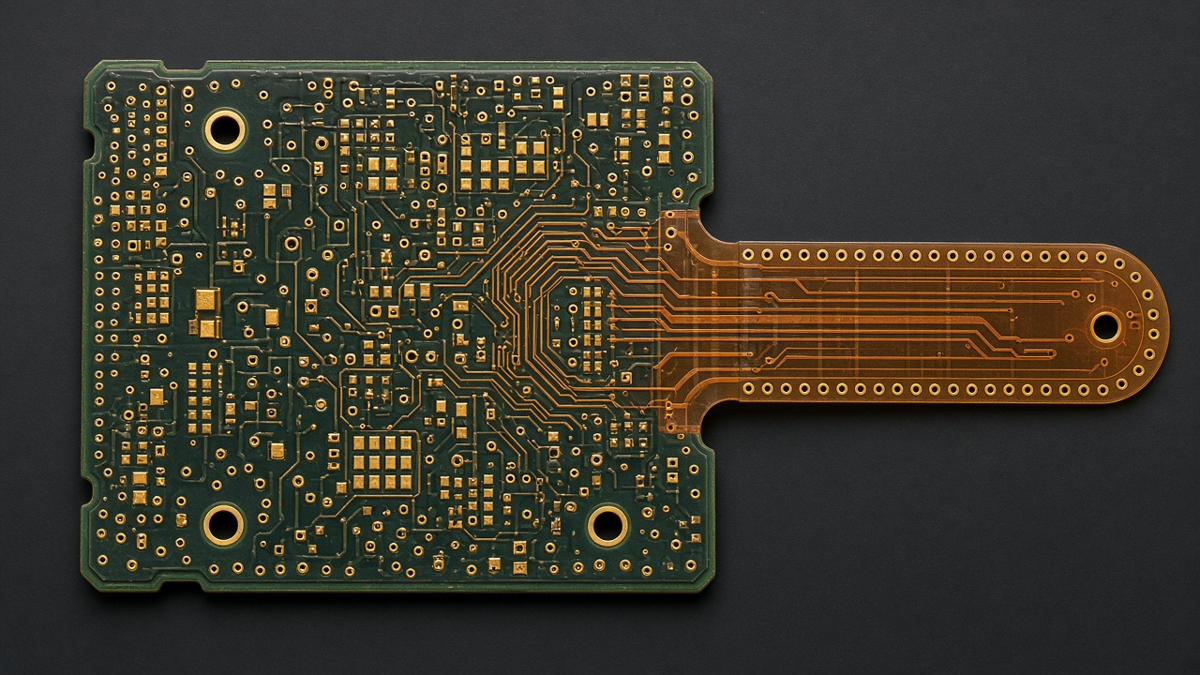
- Yes, dynamic or install bend with little room for connectors → flex or rigid-flex is forced. Next question: do you need multilayer rigid circuitry and plated through owned by the rigid stack?
- Local islands only (connector, SMT) → often FPC + stiffeners (see stiffened-flex vs rigid-flex companion).
- Dense rigid circuitry + flex tails in one part → true rigid-flex territory.
- Separate rigid boards + cable/FPC → still valid for NPI and serviceability; construction class is “rigid + interconnect,” not rigid-flex.
Wrong-class failure: rigid board with board-to-board cables that fatigue; or rigid-flex priced when a stiffener island would have done.
2) Is heat the product problem, or density?
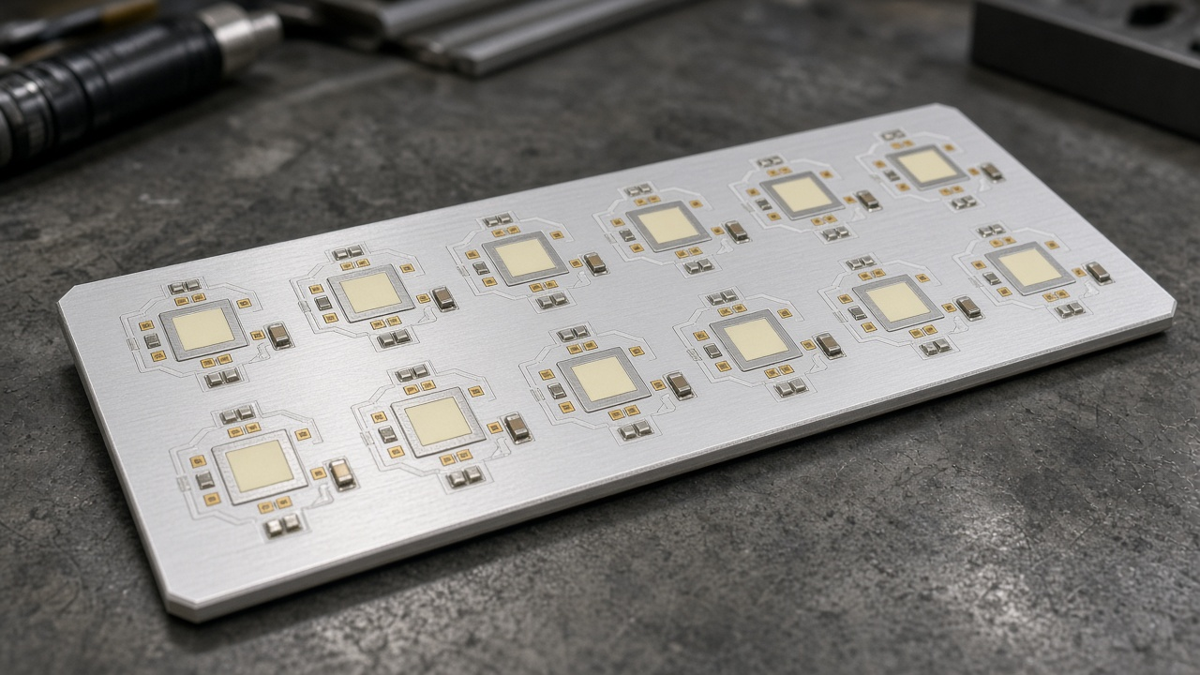
- Heat under LEDs / power devices into a metal plate → metal-core / MCPCB is a thermal construction, not a prestige type. Lock metal, dielectric thermal class, and copper—not “aluminum PCB” as fashion.
- Heat into planes / vias / coins on FR-4 → stay rigid multilayer; escalate copper or coins before swapping the whole class to metal-core.
- Ceramic / extreme thermal → different materials family again; do not conflate with MCPCB.
Wrong-class failure: metal-core used for a digital board that needed impedance layers MCPCB cannot give cheaply; or FR-4 LED board that browns under the die because class stayed “standard multilayer.”
3) Is the density problem microvias—or just not enough layers?
- Escape from fine BGA, via-in-pad, stacked microvias, thin dielectric build-up → HDI class with structure named (see HDI PCB stackup DFM).
- More routing / planes / SI without microvia process → higher layer-count rigid multilayer may be enough and cheaper to quote apples-to-apples.
- “HDI” written only because the pitch looked scary → force a via plan; many boards are commodity multilayer with careful fanout.
Wrong-class failure: paying HDI sequential lamination when 8–10L through-via would route; or ordering multilayer without microvias when the BGA physically will not escape.
4) Does the connector or Z geometry own the construction?
- ZIF/FFC tail thickness and pad side → flex (or stiffener) callouts dominate; rigid FR-4 strips are not film flex.
- Card-edge finished thickness → rigid finished Z; class may stay rigid while thickness band is the control.
- Press-fit backplane → thick rigid multilayer / backplane process, not “any multilayer.”
Wrong-class failure: stiffened flex used where press-fit needs rigid barrel integrity; or rigid used where only PI film meets mate thickness and bend.
5) Is reliability at the cable/connector the real driver?
If field failures are connector fretting, cable chafe, or assembly mis-mates—and volume justifies tooling—rigid-flex can pay even when unit board cost rises, because system scrap falls. That is an economic forcing function, not a type preference. If volume is low and design still moves, rigid + FPC jumpers may still win.
When rigid multilayer is still the right freeze
Stay rigid when:
- The product does not bend.
- Thermal path can be solved with copper, vias, sinks, or selective coins.
- Density fits through-via layer count the plant can run.
- Connectors and card edges are designed for rigid finished thickness.
Escalate inside rigid (copper weight, layer count, impedance stack, HDI sub-structure) before jumping class. Class jumps rewrite the traveler.
When flex is forced (and what the RFQ must add)
Flex is forced by space, motion, or harness replacement—not by “lightweight branding.” Once forced, the RFQ must leave rigid habits behind:
- Bend class (static install vs dynamic)
- Coverlay vs mask expectations
- Stiffener / ZIF finished thickness if mating
- Copper type (RA/ED) where fatigue matters
- Panelization and SMT carrier plan
Missing those fields yields a “flex” quote that is really a plant default and a first-article surprise. Capability pages for flexible PCB list what to confirm; this freeze only insists you stop quoting flex like FR-4.
When rigid-flex pays—and when stiffened flex is enough
Pay for true rigid-flex when you need:
- Multilayer rigid circuitry continuous with flex regions
- Plated through belonging to the rigid stack
- Transition reliability that cables cannot give
- High mating cycles or sealed assemblies where connectors are the weak link
Prefer stiffened FPC / ML flex + stiffener when:
- Hard zones are dumb islands (connector, SMT cluster)
- Layer needs in the hard zone match the flex layer count
- Cost and schedule cannot absorb rigid-flex EQ
Wrong-class failure modes:
- Stiffener edge fatigue blamed on “bad flex” when outline sat on pad roots
- Rigid-flex transitions cracking because bend started at the rigid edge
- Buyers ordering “rigid-flex” and receiving “flex with FR4 glued on” without plated rigid—name IPC-ish construction intent (Type language or equivalent plant terms) so the quote class matches
HDI vs more layers: name the via structure
HDI is a via and build-up class. More layers is a stack count class. RFQ must say which:
| Need | Construction signal | Do not write |
|---|---|---|
| Microvia escape, VIP, thin build-up | HDI with stacked/staggered plan | “HDI preferred” |
| Extra planes / routing | Layer count + stack PDF | “Maybe HDI” |
| Both | HDI and layer count | One vague density word |
Via aspect on thick rigid boards is another forcing function: if thickness and min drill fight, you need larger drills, sequential lamination, or HDI—not hope. Wrong class: thick board with tiny vias that plate poorly while the quote assumed commodity multilayer.
Metal-core: thermal construction, not type fashion
Use metal-core when the thermal path is through a metal plate under the heat source (LED arrays, some power stages). Do not use it because a competitor brochure showed aluminum boards.
RFQ must freeze:
- Metal type and thickness
- Dielectric thermal resistance class / thickness intent
- Copper weight
- Whether electrical isolation and creepage are required on the metal
Failure from wrong class: MCPCB where controlled-impedance digital needed FR-4 multilayer; or FR-4 where junction temperature required metal-core. Aluminum/MCPCB guides on the site cover materials depth—this freeze only blocks fashion picks.
RFQ callouts that change quote class
Require bidders to restate these. If two quotes disagree on class, they are not comparable.
| Callout | Why it changes class |
|---|---|
| Construction class primary | Rigid / FPC / rigid-flex / HDI / metal-core / hybrid |
| Secondary structures | Stiffeners, cavities, coins, busbars—named |
| Bend / fold intent | Static vs dynamic; cycle expectation class |
| Via architecture | Through-only vs blind/buried vs microvia map |
| Layer count per zone | Rigid zones vs flex zones if split |
| Thermal construction | MCPCB vs FR-4 thermal path |
| Connector / Z owners | ZIF thickness, card-edge band, press-fit |
| Transition count (rigid-flex) | Drives process and yield |
| Assembly support | Carrier needed for flex; press-fit for backplane |
| No silent class swap | ECO to change construction |
“FR-4 multilayer or flex, your choice” is not an RFQ. It is an invitation to underbid the harder class.
Wrong-class failure modes (buyer recognition table)
| Symptom in field or FA | Likely wrong freeze | Corrective class move |
|---|---|---|
| Cable/connector fatigue, mis-mates | Rigid + harness where rigid-flex or better interconnect needed | Re-evaluate rigid-flex vs quality cable plan |
| Flex crack at stiffener edge | Stiffened flex with bad outline / wrong duty | Fix stiffener DFM or escalate to rigid-flex if islands insufficient |
| BGA will not escape | Multilayer without microvia plan | HDI structure or package/PCB redesign |
| Barrel voids / thin plating | Thick board + fine drill as commodity ML | Aspect fix, sequential, or HDI |
| LED thermal runaway on FR-4 | Thermal forced MCPCB ignored | Metal-core class + dielectric lock |
| Impedance chaos on MCPCB | Metal-core used as “premium digital” | Return to rigid impedance stack |
| ZIF will not latch / intermittents | Rigid strip or wrong stiffener thickness | Flex tail + finished thickness control |
| Quote spread huge on “same Gerber” | Class ambiguous on RFQ | Freeze class; re-bid |
Construction-class freeze checklist (before Gerbers go out)
- Forcing function named — bend, thermal plate, microvia density, connector Z, connector reliability, or none (stay rigid).
- Primary class frozen — one primary; hybrids explicitly dual-class.
- Rejected classes listed — e.g. “not MCPCB,” “not HDI unless via plan attached.”
- Via / bend / thermal extras attached — structure sketches beat adjectives.
- Quote must echo class — line item construction name matching the freeze.
- ECO rule — class change is a program ECO, not a purchasing preference.
- Sibling playbooks linked on the traveler — rigid/FPC/RF selection, stiffened vs RF, method/HDI map—without turning this RFQ into a taxonomy essay.
Proto vs volume: do not freeze class on a learning spin forever
Prototype boards may temporarily use rigid + cable while the fold and connector stack are still moving. That is rational. The failure is promoting that temporary class into MP tooling without revisiting the forcing function. Before ramp:
- Re-run the decision tree with the shipping enclosure and connector set.
- If bend or connector reliability now forces flex or rigid-flex, change class under ECO before ICT fixtures and soft tooling assume rigid panelization.
- If density now forces microvias, attach a via plan and move the quote into HDI class explicitly—do not “add HDI later” as a silk note.
Construction class is allowed to evolve once. It is not allowed to drift silently between EVT and MP under the same PO language.
What to decide on the next RFQ
Do not start from “which of the seven types sounds right.” Start from the forcing function, freeze one construction class (and only the secondary structures you truly need), and make every bidder restate that class. Catalogs explain names; freezes prevent paying for the wrong process book—or shipping a board that was never the right construction for the product’s bend, heat, density, or connector reality. When the forcing function changes (new package pitch, new thermal load, new fold), reopen the freeze on purpose; do not inherit last product’s “multilayer FR-4” habit onto a flex-shaped problem.